
 Português
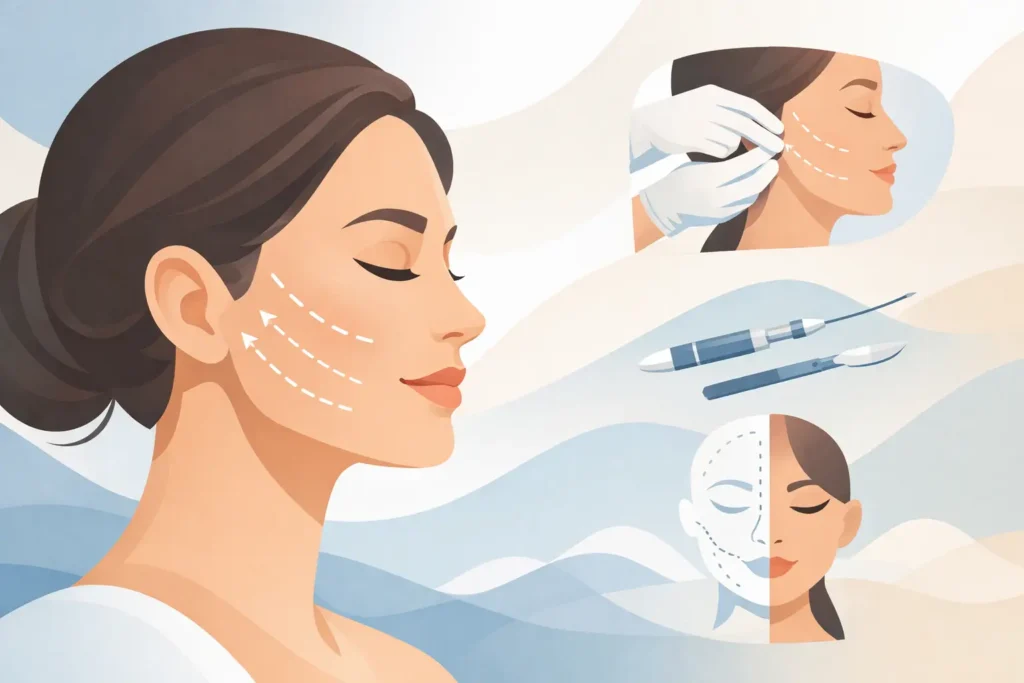
A well-performed facelift should not announce itself. It should allow you to look rested, refined, and more like yourself, without the tightness or altered expression many patients fear. Modern facelift techniques are designed around that principle: restoring facial support at the level where aging occurs, rather than simply pulling the skin tighter.
The right approach is never selected from a menu. Facial anatomy, skin quality, volume loss, neck laxity, bone structure, and the degree of aging all influence the surgical plan. For patients traveling to Brazil, this personalized planning is especially valuable because it creates clarity around the procedure, recovery period, and the support needed before returning home.
Why Facelifts Need More Than Skin Tightening
Facial aging is not caused by one change. Over time, the deeper support layers of the face descend, facial fat compartments shift or diminish, the jawline loses definition, and the neck may develop bands or looseness. Skin elasticity also changes, but it is only one part of the picture.
Earlier facelift methods often relied heavily on removing skin and creating tension at the surface. While this can improve laxity temporarily, excessive skin tension may lead to an unnatural appearance, widened scars, or a result that fades sooner than expected. Contemporary facial rejuvenation focuses on repositioning deeper structures first, then allowing the skin to redrape with minimal tension.
This distinction matters. A natural-looking result comes from restoring proportion and support, not from making the face look artificially stretched.
The Main Facelift Techniques
SMAS Facelift
The SMAS, or superficial musculoaponeurotic system, is a fibrous layer beneath the skin that connects with the facial muscles. In a SMAS facelift, this layer is lifted and secured to improve the cheeks, lower face, jawline, and often the upper neck.
A SMAS facelift can be an excellent choice for patients with moderate signs of facial descent who want meaningful rejuvenation without necessarily requiring the most extensive dissection. It offers a more structural correction than a skin-only lift and can provide elegant improvement in the lower face.
The technique, however, has limits. In patients with heavier tissues, pronounced midface descent, or more advanced jowling, a surgeon may recommend a deeper approach to achieve the desired lift without relying on surface tension.
Deep Plane Facelift
The Deep Plane facelift is among the most advanced facelift techniques for patients seeking a refined, comprehensive improvement in the midface, jawline, and neck. Rather than lifting the skin and SMAS separately, the surgeon works beneath the SMAS layer to release key retaining ligaments and reposition the deeper facial tissues as a unified layer.
This allows the cheeks and lower face to be elevated more naturally. Because the lift is carried by deeper structures, there is generally less tension on the skin. The goal is not a dramatic change in identity. It is a return to the balance and facial contours that time has softened.
A Deep Plane facelift can be especially effective for patients with deep nasolabial folds, loss of cheek support, jowls, and neck laxity. It is technically demanding and should be performed by a surgeon with detailed knowledge of facial anatomy and a disciplined approach to safety. The procedure is not automatically better for every patient, but for the right candidate, it can produce a particularly harmonious and enduring result.
Mini Facelift or Short-Scar Facelift
A mini facelift, sometimes called a short-scar facelift, is designed for earlier or more limited signs of aging. The incisions are typically shorter, and the procedure focuses primarily on the lower face and jawline. It may be appropriate for patients in their 40s or early 50s, although age alone is never the deciding factor.
The appeal is understandable: a less extensive procedure can mean a shorter recovery and a subtle improvement. But subtle should not be confused with insignificant. A mini lift cannot reliably correct substantial neck laxity, pronounced jowls, or significant midface descent.
For someone with mild concerns, it may be exactly the right choice. For someone seeking a full facial transformation, selecting a smaller operation to avoid downtime can lead to under-correction and disappointment. The most conservative procedure is not always the most natural one. The best procedure is the one that appropriately matches the anatomy.
Neck Lift as Part of Facial Rejuvenation
The neck often reveals aging earlier than the face. Loose skin, vertical muscle bands, fullness beneath the chin, and loss of the cervicomental angle can make the profile appear heavier even when the face itself is still youthful.
A facelift may improve the neck, but not every facelift addresses it to the same degree. When neck concerns are significant, a dedicated neck lift may be performed alongside facial lifting. This can involve tightening the platysma muscle, removing or contouring excess fat, and refining the jaw-to-neck transition.
For many patients, treating the face without treating the neck creates an imbalance. A well-planned procedure considers both areas as part of one continuous aesthetic unit.
Facial Volume Restoration and Complementary Procedures
Lifting descended tissue is only part of facial rejuvenation. Some faces also need carefully restored volume. With age, the temples, cheeks, under-eye area, and lower face can appear hollow or flattened. If volume loss is ignored, even an excellent lift can look incomplete.
Autologous fat grafting uses a patient’s own purified fat to restore softness and contour in areas that have become depleted. When performed with precision, it can complement a facelift by bringing gentle fullness back to the cheeks, temples, and facial transitions. The goal is not to overfill the face, but to create an elegant, rested quality that supports the surgical lift.
Eyelid surgery is another common companion procedure. A facelift does not directly correct upper eyelid hooding, under-eye bags, or excess eyelid skin. Blepharoplasty can refresh the eye area, while a brow lift may be considered when the brow position contributes to a tired or heavy expression. In selected patients, laser treatments, skin resurfacing, or non-surgical treatments may further improve skin texture and tone.
The most successful plans are often balanced rather than extensive. A subtle adjustment in several areas can look more believable than an aggressive correction in only one.
Choosing the Right Technique for Your Face
The best facelift consultation goes beyond the question, “Which technique is best?” A more useful question is, “What changes are affecting my face, and what is the most precise way to address them?”
Your surgeon should evaluate the quality and position of facial tissue, the degree of skin laxity, neck anatomy, previous procedures, medical history, and your desired level of change. Photographs may be used to discuss proportions and establish realistic expectations. The objective is to identify what will create a refreshed appearance while respecting the features that make your face distinctly yours.
Patients who have had fillers should share this information openly. Existing filler can affect the assessment of facial volume and, in some cases, may need to be dissolved or managed before surgery. Previous facelifts also require thoughtful planning because scar tissue and altered anatomy can change the approach.
At Dr. Hebert Lamblet Plastic Surgery, facial rejuvenation planning is centered on technical precision, natural facial expression, and attentive support for international patients from consultation through recovery.
Recovery: Allowing the Result to Settle Beautifully
Recovery is a meaningful part of the facelift experience. Swelling, bruising, tightness, and temporary changes in sensation are expected in the early phase. Most patients begin to feel socially presentable within approximately two to three weeks, although this varies according to the extent of surgery and individual healing.
The face continues to settle over several months. Early swelling can disguise the refinement of the result, particularly around the cheeks and jawline. Patience is essential. Final scar maturation and tissue settling take time, and a skilled surgeon will provide specific aftercare guidance to protect the healing process.
For international patients, travel planning should be approached conservatively. You will need adequate time near the surgical team for follow-up appointments, wound assessment, and clearance before flying. Arranging comfortable accommodations, local support, and a realistic schedule reduces unnecessary stress and allows recovery to remain the priority.
A Result That Respects Your Identity
A facelift is not about chasing a younger version of someone else. It is about restoring facial harmony in a way that feels aligned with your identity, lifestyle, and stage of life. The most compelling outcomes are often the ones friends notice without immediately identifying why: a clearer jawline, softer fatigue around the face, a more rested presence.
When considering facial rejuvenation, give equal weight to the surgeon’s technical experience, aesthetic judgment, and ability to listen. The right plan should feel considered, never rushed, and should leave room for a result that looks beautifully like you.
