
 Português
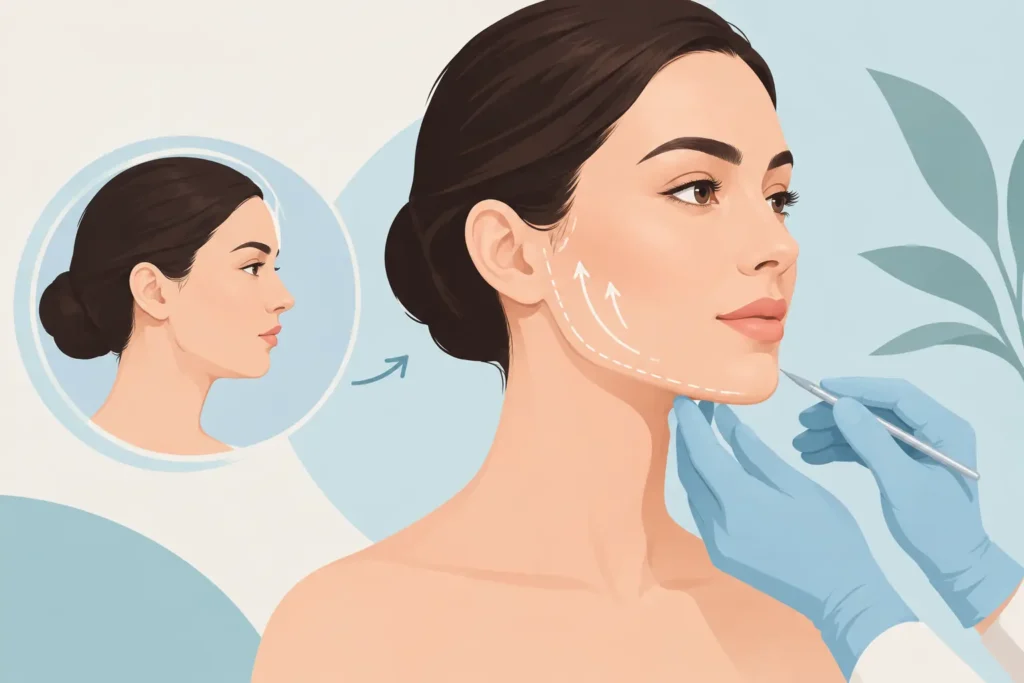
A beautifully contoured face should not look redesigned. It should look rested, balanced, and distinctly yours. Facial contouring surgery is designed around that principle: refining the relationship between the cheeks, jawline, chin, temples, and neck so that each feature supports the whole face rather than competing for attention.
For some patients, contouring means creating a more defined jawline or bringing a recessed chin into better proportion. For others, it means restoring facial volume lost with time, softening hollows, or addressing excess fullness that obscures natural bone structure. The right approach is never based on a trend or a single photograph. It begins with a careful understanding of your anatomy, goals, skin quality, and the character you want your face to retain.
What Facial Contouring Surgery Can Address
Facial contouring is not one procedure. It is a personalized surgical plan that may combine refinement, structural support, volume restoration, or rejuvenation. A thoughtful plan considers the face in three dimensions, including projection, width, definition, and the way the face changes in motion.
Chin augmentation or genioplasty can improve the balance between the lower face, nose, and neck. A chin that sits slightly behind the ideal facial profile can make the jawline appear less defined, even in patients who are otherwise slim. Depending on the anatomy and desired correction, this may be addressed with an implant or by repositioning the patient’s own chin bone.
Jawline contouring can create a cleaner transition from the ear to the chin and improve the appearance of the lower face. In select patients, this may involve carefully placed implants, fat reduction beneath the chin, neck contouring, or a surgical lifting technique that restores definition to tissues that have descended over time.
Cheek enhancement and midface volume restoration can be equally transformative. With aging, facial fat compartments shift and diminish, often creating flattening through the cheeks and shadows beneath the eyes. Autologous fat grafting uses your own purified fat to restore volume with a soft, natural quality. It can be especially valuable when the goal is not simply to look younger, but to look more like yourself before volume loss changed the face.
Some patients ask about buccal fat removal to create a more sculpted cheek area. This procedure can be appropriate for carefully selected faces with persistent fullness in the lower cheeks. However, it requires restraint. Removing too much volume can make a face appear hollow as it ages, particularly in patients with naturally lean features. Long-term balance matters more than a dramatic early result.
The Difference Between Contouring and Rejuvenation
The distinction is subtle but meaningful. Facial contouring focuses on proportion and structure. Facial rejuvenation addresses the visible effects of aging, such as laxity, volume loss, deep folds, and changes in the neck.
In reality, the two often overlap. A patient in their thirties may seek chin definition and subtle cheek support. A patient in their fifties or sixties may benefit from a Deep Plane facelift combined with fat grafting to restore youthful facial architecture while improving skin and tissue position. Treating only loose skin without addressing lost volume can create a result that appears tightened but not fully refreshed. Conversely, adding volume without correcting significant laxity may not achieve the desired definition.
The most elegant results come from choosing the right intervention for the reason the contour changed in the first place. Genetics, weight fluctuations, aging, dental structure, and skin quality all influence the plan.
Planning Facial Contouring Surgery With Precision
A consultation should feel like a detailed conversation, not a sales presentation. Your surgeon will evaluate facial proportions from the front, side, and three-quarter views, as well as the quality of your skin and soft tissue. The goal is to identify what is truly creating imbalance.
For example, a weak jawline may be related to a small chin, fullness below the chin, loose neck tissue, or a combination of all three. These concerns can look similar at first glance, yet they require very different solutions. Treating the wrong element may produce an overdone result or leave the original concern unresolved.
Your medical history matters as much as your photographs. Smoking, certain medications, healing tendencies, prior fillers, previous facial surgery, and weight stability can all influence surgical recommendations and recovery planning. Patients should be candid about aesthetic treatments they have received, including injectable fillers, since residual product may affect assessment of the underlying facial structure.
At Dr. Hebert Lamblet Plastic Surgery, facial planning is guided by meticulous technique and respect for individual identity. The intention is not to impose a standardized face, but to create harmony that feels believable in every setting, from a close conversation to an unposed photograph.
What Recovery Is Really Like
Recovery varies according to the procedures performed. After chin or jawline surgery, swelling, bruising, tightness, and temporary changes in sensation are common. After fat grafting, there may be swelling in both the treated areas and the donor site. Facelift-based contouring involves a longer healing process because the deeper facial tissues need time to settle into their new position.
Most patients begin to feel socially presentable before every trace of swelling has resolved. That distinction is worth understanding. The early improvement can be encouraging, but refined results develop gradually. Swelling tends to resolve unevenly, and subtle changes in facial definition may continue for several months.
Patients are usually asked to protect their recovery by avoiding strenuous exercise, keeping the head elevated when directed, attending follow-up appointments, and following incision-care instructions precisely. Sun protection is particularly valuable during healing, since healing skin and scars can become more noticeable with ultraviolet exposure.
For international patients traveling to Brazil, recovery planning should be considered before surgery is scheduled. Time away from work, the recommended length of stay, post-operative visits, lodging, and the need for a trusted travel companion all deserve attention. A well-organized experience allows patients to focus on healing rather than logistics.
Choosing a Result You Will Still Appreciate Years From Now
The best candidates for facial contouring surgery are generally healthy adults with realistic expectations and a clear reason for seeking change. They are often looking for improvement, not perfection. Surgery can refine structural imbalance and restore support, but it cannot erase every asymmetry or stop the natural aging process.
A conservative surgical philosophy is especially valuable in the face. Fashionable extremes can date quickly, while balanced proportions remain compelling. A sharply exaggerated jawline, overly projected cheeks, or excessive facial slimming may draw attention to the procedure rather than to the person. Natural-looking contouring respects the difference between a striking result in a filtered image and a result that ages gracefully.
Non-surgical treatments may be appropriate for patients who need modest volume restoration or want to explore a temporary change before surgery. Fillers can add projection in selected areas, but they cannot reposition sagging tissue or permanently alter bone structure. Fat grafting offers a longer-lasting, biologically natural option for volume, though some of the transferred fat is expected to be absorbed. Surgery is chosen when structural change, tissue repositioning, or durable refinement is the true goal.
A refined face is not defined by sharper angles alone. It is defined by proportion, softness where softness belongs, and structure where structure is needed. The most rewarding next step is a consultation that gives your features the same care and consideration you give to the vision you have for yourself.
