
 Português
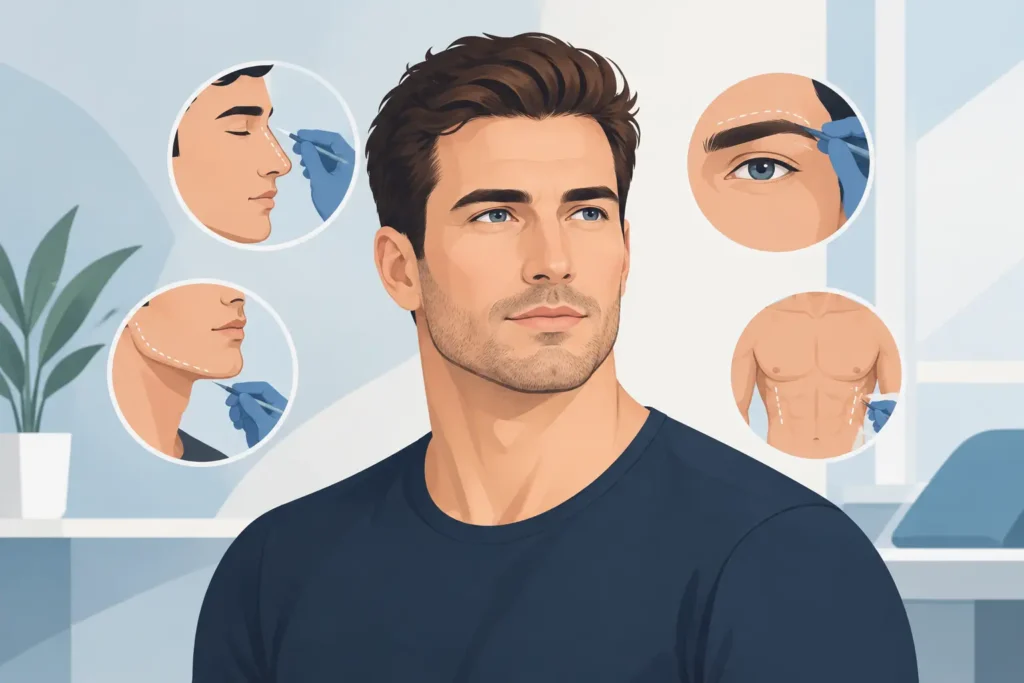
A stronger jawline, a flatter chest, a more rested expression, or a body that better reflects the effort already put into fitness can be meaningful goals. Male plastic surgery options are not about replacing masculine character with a generic ideal. The most sophisticated approach preserves what makes a face or physique distinctive while refining the features that no longer feel aligned with a patient’s confidence.
Men often arrive at a consultation with a clear concern but not necessarily a procedure in mind. That is a sensible place to begin. The right treatment is determined by anatomy, skin quality, age, health history, lifestyle, and the degree of change desired. A precise surgical plan should be individual, never formulaic.
Male Plastic Surgery Options for the Face
Facial surgery for men requires a particularly measured eye. Male facial anatomy tends to have stronger bone structure, heavier brows, thicker skin, and different patterns of aging than female anatomy. The goal is usually to look more rested, defined, or balanced without softening the traits that give the face its identity.
Rhinoplasty
Male rhinoplasty can address a dorsal hump, a wide nasal bridge, a drooping tip, asymmetry, or breathing concerns when appropriate. Rather than pursuing a small or overly narrow nose, the surgical objective is typically proportion: a nose that sits naturally within the face and supports a strong profile.
This procedure demands patience. Initial swelling improves steadily, but refinement can continue for many months, especially at the nasal tip. Patients should also understand that the best rhinoplasty result may be subtle to others. It should look as though the nose has always belonged to the face.
Eyelid Surgery
Blepharoplasty can be an excellent option for men whose upper eyelids appear heavy or whose lower eyelids look puffy and fatigued. It can create a more alert expression without making the eyes appear altered. Preserving the natural brow position and avoiding excessive skin removal are essential to a convincing result.
For some patients, lower eyelid concerns are caused less by excess skin than by volume loss in the cheeks or shadows beneath the eyes. In those cases, eyelid surgery alone may not be the most elegant answer. Facial fat grafting or another volume-restoring strategy may be considered as part of a more balanced plan.
Facelift and Neck Contouring
A facelift is not reserved for one age group. It may be appropriate when jowling, deeper folds, loose neck skin, or loss of jawline definition cannot be meaningfully improved with non-surgical care. For men, the aim is a clean jawline and smoother neck that still look natural in motion and at close range.
A Deep Plane facelift can reposition deeper facial structures rather than simply pulling the skin. The technique is selected based on each patient’s anatomy and goals, not because one approach is right for everyone. When the neck is a primary concern, neck liposuction, muscle tightening, or skin redraping may be incorporated to improve the angle beneath the chin.
Chest and Body Procedures for Men
A disciplined training routine can transform the body, but it cannot always correct glandular breast tissue, genetic fat distribution, loose skin after weight loss, or resistant abdominal fullness. Body contouring procedures are most rewarding when they refine a stable foundation rather than serve as a substitute for long-term weight management.
Gynecomastia Surgery
Gynecomastia describes the enlargement of male breast tissue. It may develop during puberty, after weight fluctuations, due to medications, hormonal factors, or without a clearly identifiable cause. Even when it is concealed beneath clothing, it can affect the way a man dresses, exercises, or feels at the beach.
Surgical correction may involve liposuction, direct removal of firm glandular tissue, or both. The decision depends on whether the chest fullness is primarily fat, gland, or a combination. In cases involving significant skin laxity, skin removal may also be necessary, though this introduces additional scars. A thorough medical assessment is important, particularly if breast enlargement is new, painful, one-sided, or associated with other symptoms.
Liposuction and Abdominal Definition
Liposuction can refine localized fat deposits around the abdomen, flanks, chest, back, chin, or lower body. For male patients, careful contouring of the waist and flanks can create a more athletic silhouette by improving the transition from the torso to the hips.
It is not a weight-loss operation, and it does not correct loose abdominal skin or separated abdominal muscles. Men with good skin elasticity and a weight that has been stable for several months are often the strongest candidates. If there is considerable skin excess after major weight loss, an abdominoplasty may offer a more complete improvement, though it requires a longer incision and recovery period.
Body Lift After Weight Loss
Significant weight loss deserves to be recognized as an achievement, yet excess skin can remain on the abdomen, chest, arms, back, and thighs. Post-weight-loss surgery is planned with special care because treating every area at once is not always the safest choice. Staging procedures can reduce operative time and allow recovery to be managed more comfortably.
The trade-off is clear: a greater degree of skin removal can create a more dramatic contour, but it also results in longer scars. During consultation, the conversation should be honest about where scars will sit, how they may mature, and what level of improvement is realistic for the skin quality present.
Choosing Between Surgical and Non-Surgical Care
Not every concern requires surgery. Injectable treatments may soften selected lines or restore facial volume, while skin-focused treatments can support tone and texture. These options are often useful for early signs of aging or for patients who want a gradual change with limited downtime.
However, non-surgical treatments have limits. They cannot remove substantial skin laxity, correct prominent jowls, eliminate glandular gynecomastia, or produce the structural changes of a rhinoplasty. Repeated temporary treatments can also become less economical than surgery over time. The best choice depends on the problem being treated, the longevity desired, and comfort with recovery.
What a Thoughtful Consultation Should Cover
A quality consultation is more than a discussion of before-and-after photographs. It should include an examination of facial proportions or body anatomy, a review of medical history, medication use, nicotine exposure, and previous procedures. It should also make room for the patient’s concerns about scars, anesthesia, downtime, privacy, and returning to work or travel.
For international patients, planning should begin well before surgery. A safe journey includes adequate time in Brazil for preoperative assessment, early recovery, postoperative appointments, and clearance to fly home. Recovery is not only a medical consideration. It affects hotel arrangements, support from a companion, comfortable transportation, and the ability to rest without pressure to resume normal activities too soon.
At Dr. Hebert Lamblet Plastic Surgery, the emphasis is on carefully considered enhancement, detailed surgical planning, and attentive support for patients traveling from abroad. A natural result begins long before the operating room, with clear communication about what surgery can achieve and what it cannot.
Recovery, Scars, and Lasting Results
Recovery timelines vary by procedure and by person. Bruising and swelling are expected after many facial procedures, while body surgery may require compression garments, restricted activity, and several weeks before exercise can safely resume. Feeling socially presentable and being fully healed are different milestones. Residual swelling can persist after the visible signs of surgery have faded.
Scars are a normal part of surgical treatment. A meticulous incision plan can place them as discreetly as anatomy allows, but no ethical surgeon should promise scarless surgery. Scar maturation takes time, often a year or more, and depends on genetics, skin type, aftercare, sun exposure, and tension on the healing area.
Lasting results also depend on maintenance. Stable weight, sun protection, sensible exercise, healthy nutrition, and avoiding nicotine all support healing and help preserve surgical refinement. Facial aging will continue, and body shape may change with future weight fluctuations, but a well-executed procedure can provide an enduring foundation.
The most satisfying decision is rarely the most dramatic one. It is the option that respects your anatomy, suits your life, and allows you to look in the mirror with greater ease and confidence.
