
 Português
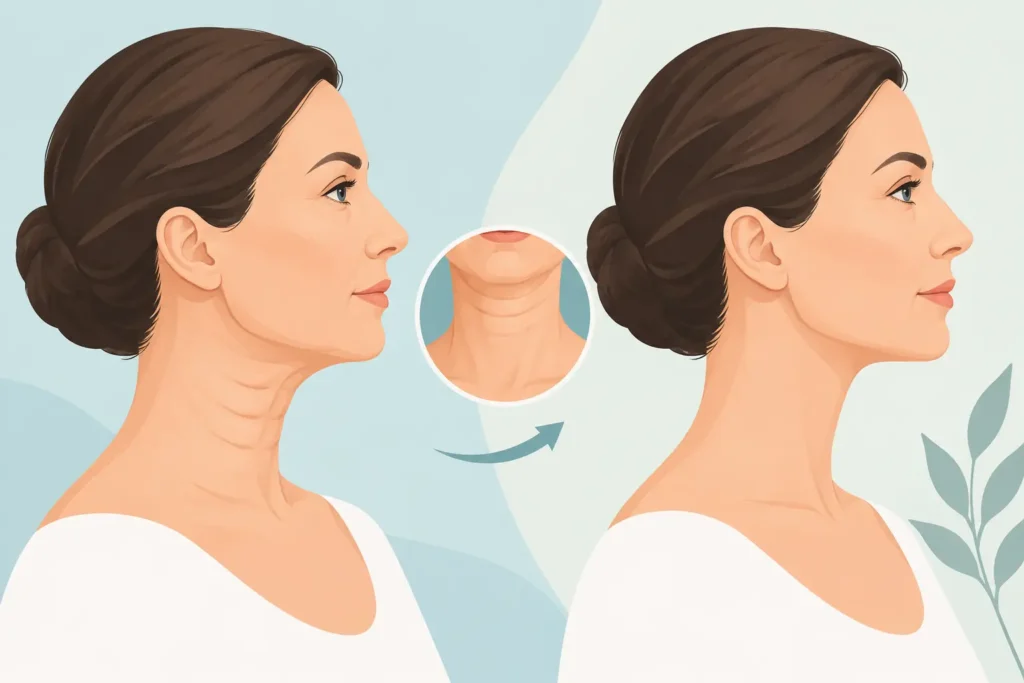
A sharp jawline can make the entire face appear more rested, elegant, and defined. But when vertical neck bands become visible beneath the chin, many patients ask: do facelifts improve neck bands? The answer is often yes, but not always completely. The degree of improvement depends on the surgical technique, the cause of the bands, skin quality, and whether the neck is treated as part of the operation.
For patients seeking natural-looking facial rejuvenation, the distinction matters. A well-planned facelift can refine the lower face and improve early neck laxity. More pronounced platysmal bands, loose skin, or fullness below the chin may require a facelift combined with a neck lift for a smoother, more harmonious result.
What Causes Neck Bands?
Neck bands are usually caused by the platysma, a thin sheet of muscle that extends from the lower face and jawline into the neck. Over time, this muscle can separate or become more visible as the skin loses elasticity and facial fat shifts downward.
These vertical lines may appear only when speaking, turning the head, or tightening the neck. In other patients, they remain visible at rest. Genetics, sun exposure, weight fluctuations, and the natural aging process can all influence how early and how prominently they develop.
Neck bands are not simply a skin concern. Although loose skin can make them more noticeable, the muscle itself is frequently the central issue. This is why creams, skin tightening treatments, and injectables may offer limited improvement when bands are well established.
Do Facelifts Improve Neck Bands on Their Own?
A facelift can improve neck bands when the procedure includes work beneath the jawline and along the upper neck. Modern facelift techniques are designed to address deeper facial support structures rather than merely pulling the skin tighter. By repositioning descended tissue and refining the jawline, a facelift often creates a more youthful transition from the face to the neck.
However, a facelift focused primarily on the cheeks and lower face may not fully correct prominent neck bands. If the platysma muscle has separated significantly, tightening or repositioning that muscle is usually necessary for a meaningful and lasting change.
This is why a consultation should focus on the entire facial profile, not the neck in isolation. A beautifully refined lower face can look incomplete if the neck remains lax, heavily banded, or full beneath the chin. Conversely, treating the neck without considering the jawline may not create the balanced result a patient expects.
When a Neck Lift Is Added to a Facelift
A neck lift is commonly performed alongside a facelift when patients have visible platysmal bands, excess neck skin, fat beneath the chin, or loss of definition along the jawline. The exact approach is individualized, but it may involve tightening the platysma muscle through a discreet incision beneath the chin, removing or contouring excess fat, and redraping the skin with precision.
For many patients, combining procedures is the most elegant solution. The face and neck age together, and their rejuvenation should feel visually connected. A lifted cheek with a soft, refined jawline and smoother neck often appears more natural than a result focused on one area alone.
A combined approach can also be more efficient than staging surgeries separately. There is one surgical plan, one recovery period, and one opportunity to create a cohesive outcome. That said, combining procedures is not automatically right for every patient. Health history, healing capacity, surgical goals, and the extent of correction needed should guide the decision.
Facelift With Neck Lift vs. Neck Lift Alone
Patients whose main concern is confined to the neck may be candidates for a neck lift without a full facelift. This can be appropriate when the cheeks and midface still have good position and volume, but the neck shows laxity or banding.
A facelift with neck lift is generally more appropriate when there is jowling, deepening folds around the mouth, lower facial heaviness, and a less defined jawline in addition to neck changes. Treating both areas allows the surgeon to restore a smoother contour from the cheek to the chin and down through the neck.
The most suitable procedure is not determined by age alone. Some patients in their 40s develop early platysmal banding because of genetics, while others in their 60s may have remarkably good skin quality but deeper structural descent. A thoughtful surgical plan responds to anatomy rather than a number on a birthday card.
The Role of a Deep Plane Facelift
A Deep Plane facelift can be particularly valuable for patients who want improvement in the lower face while preserving a soft, unoperated appearance. Rather than relying on tension at the skin level, this technique releases and repositions deeper facial tissues. It can elevate the cheeks, soften jowls, and improve the contours that frame the jawline.
For neck bands, however, the Deep Plane facelift may need to be paired with direct neck treatment. The deep-plane approach addresses facial descent exceptionally well, but visible platysmal bands may still require platysmaplasty, or surgical tightening of the platysma muscle, for optimal correction.
This is where surgical artistry becomes especially meaningful. The objective is not to create a tight neck or an overly pulled lower face. It is to restore definition while respecting the patient’s natural features, expressions, and proportions.
What Results Can You Realistically Expect?
When neck bands are treated appropriately, patients can expect a smoother neck contour, improved jawline definition, and a more refreshed profile. The neck may appear longer and more graceful because the visual interruption of banding and lax skin has been reduced.
No procedure can stop the aging process, and no surgeon should promise absolute perfection. Fine lines, skin texture, and some natural muscle movement may remain. Patients with very thin skin, substantial sun damage, or strong platysma activity may continue to notice subtle bands under certain lighting or facial expressions.
The goal is improvement that looks believable. An excellent result should not announce surgery. It should allow others to notice that you look rested, confident, and well cared for without immediately identifying why.
Recovery After Facelift and Neck Band Correction
Recovery varies according to the extent of surgery and whether additional procedures are performed. Swelling, bruising, a feeling of tightness, and temporary changes in sensation are expected during the early healing period. Patients are typically advised to keep the head elevated, avoid strenuous activity, and follow all aftercare instructions closely.
The first several days are focused on rest and protecting the surgical area. Most visible bruising and swelling improve substantially over the following weeks, though refined definition continues to emerge as deeper tissues settle. Neck swelling can be particularly slow to resolve, so patience is part of the process.
For international patients traveling to Brazil, careful planning is essential. Adequate time near the practice for follow-up appointments, recovery support, and clearance before flying helps make the experience safer and more comfortable. At Dr. Hebert Lamblet Plastic Surgery, surgical planning is approached with the same attention to detail as the procedure itself.
Can Non-Surgical Treatments Help Neck Bands?
Non-surgical treatments can be useful for mild concerns, especially when the bands are not deeply etched and skin laxity is limited. Neuromodulator injections may relax active platysmal bands in selected patients, while energy-based treatments may provide modest support for skin quality.
These options do not replicate the structural correction of surgery. They are temporary, and they cannot remove significant excess skin or repair separated platysma muscle. For someone with pronounced banding and lower-face laxity, relying on non-surgical treatments alone may lead to repeated maintenance without achieving the contour they truly want.
The right choice depends on whether your priority is subtle, temporary refinement or a more substantial and enduring surgical improvement.
A Consultation Should Look Beyond the Bands
Neck bands are often the concern a patient sees first in the mirror, but they are rarely the only feature affecting the lower face. During a personalized evaluation, the surgeon should assess skin elasticity, fat distribution, jawline support, chin projection, facial volume, and the position of the platysma muscle.
This broader view allows the treatment plan to feel balanced rather than overcorrected. In some cases, a facelift and neck lift are ideal. In others, a neck-focused procedure, facial fat grafting, chin enhancement, or non-surgical treatment may better serve the patient’s goals.
The most reassuring path is one built around your anatomy, not a standard formula. When the face and neck are treated with precision and restraint, the result can preserve what is uniquely yours while restoring the definition that time has softened.
