
 Português
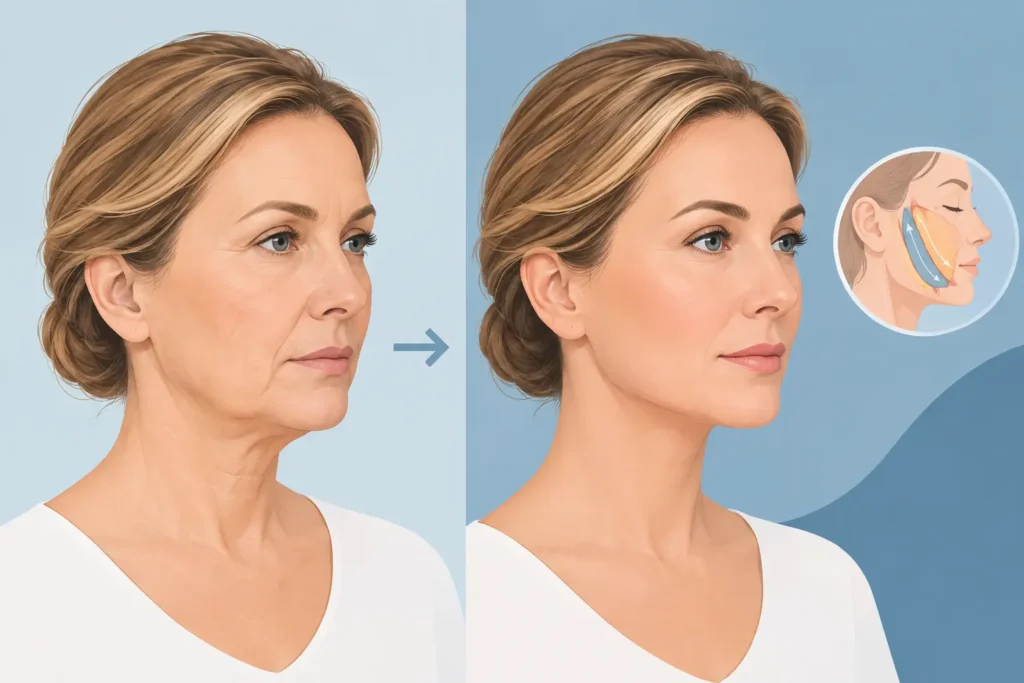
A well-performed facelift should not announce itself from across the room. The most compelling deep plane facelift before after examples show a face that appears rested, refined, and more aligned with the patient’s energy – not altered into someone else. The jawline is clearer, the midface is better supported, and the neck may look smoother, yet the person’s character remains entirely recognizable.
For patients considering facial rejuvenation, photographs can be valuable evidence of a surgeon’s aesthetic judgment. They can also be misleading when viewed without context. Lighting, healing stage, facial expression, weight changes, and complementary procedures all influence what a before-and-after image communicates. Knowing how to assess these images helps turn inspiration into a more informed, realistic conversation.
What Deep Plane Facelift Before After Examples Can Show
A deep plane facelift addresses age-related descent in the deeper facial tissues rather than relying only on skin tightening. The technique releases and repositions selected retaining ligaments and lifts the deeper layer of the face, often called the SMAS-platysma complex, according to each patient’s anatomy and needs.
In thoughtfully documented results, this can create a more natural improvement through the cheeks, jawline, and upper neck. Rather than pulling the skin toward the ears, the goal is to restore support in a more vertical, anatomically appropriate direction. This distinction matters because excessive skin tension is one reason some facelift results can look tight or windswept.
Before-and-after examples may reveal several changes at once: a softened nasolabial fold, reduced jowling, a cleaner mandibular border, less heaviness in the lower face, and improved neck definition. In the best cases, these changes work together quietly. A single feature should not become the focus of the result.
The midface often tells the real story
Many people focus first on the jawline, but the midface is often where a deep plane approach demonstrates its particular value. As facial tissues descend with time, the cheeks can flatten while fullness collects lower in the face. The result may be a tired or heavy appearance, even in someone who is otherwise healthy and active.
In before-and-after images, look for a gentle return of cheek support rather than an overfilled look. The transition between the lower eyelid, cheek, and nasolabial area should appear smoother, while still retaining natural facial contours. This is especially meaningful for patients who want rejuvenation without the appearance of added volume.
How to Evaluate Before-and-After Photos With Discernment
A beautiful result is not defined by the most dramatic transformation. It is defined by whether the surgical plan respects the individual face. When reviewing a gallery, look beyond a single impressive image and consider the consistency of the surgeon’s work across different ages, facial shapes, skin qualities, and degrees of aging.
Photos are most useful when they are taken under similar conditions. Comparable lighting, camera angle, distance, head position, hairstyle, and facial expression make it easier to see true surgical change. A forward-facing image may show improvements in facial balance, while profile and three-quarter views are often more revealing for the jawline, neck, and cheek contour.
Also pay close attention to the details that should remain discreet. Incisions should be placed thoughtfully around the ear and hairline, with scars becoming less noticeable as healing progresses. The earlobe should look natural rather than pulled downward. The tragus, the small cartilage at the front of the ear canal, should not appear distorted. These refinements reflect planning, technical precision, and careful tissue handling.
Ask when the after photo was taken
Timing changes everything. An image taken two weeks after surgery may show early improvement, but it can also include swelling, bruising, firmness, and a temporarily elevated or fuller appearance. At several months, the tissues have generally settled more fully, although healing continues to evolve over time.
A reputable consultation should include an honest discussion of recovery rather than presenting a single image as an immediate final result. Most patients need to plan for social downtime, particularly during the first two weeks. Residual swelling can take longer to resolve, and subtle refinements may continue for months. The pace depends on the extent of surgery, skin quality, individual healing, and whether other procedures were performed.
What a Natural Result Looks Like at Different Ages
There is no single “facelift face,” and there should not be. A patient in her late 40s may seek early correction of jowling and cheek descent while preserving the softness and vitality appropriate to her age. A patient in her 60s may desire more substantial restoration of the jawline and neck, yet still want to look like herself at a well-rested, confident stage of life.
Men also require a distinct approach. Male facial anatomy, beard-bearing skin, hairline patterns, and the desire to retain stronger angular features all influence incision placement and surgical planning. A successful result should preserve masculinity while reducing the heaviness or laxity that no longer feels representative of the patient.
Skin quality matters as well. Surgery can reposition descended tissue and remove selected excess skin, but it does not erase every fine line, sun-related texture change, or natural asymmetry. Patients with significant volume loss may benefit from carefully planned autologous fat grafting, while eyelid surgery can address concerns that a facelift does not correct. In some cases, a neck lift is essential to create harmony between the face and neck.
For this reason, the most revealing examples are those that show a complete, individualized strategy rather than a one-size-fits-all operation. The question is not simply, “How much younger does this person look?” It is, “Does this result look balanced, believable, and appropriate for this person?”
The Trade-Offs Behind a More Comprehensive Lift
A deep plane facelift can be an excellent choice for patients with midface descent, jowling, and neck laxity who want a durable, natural-looking improvement. However, it is a surgical procedure, not a quick cosmetic treatment. It requires anesthesia, incisions, recovery time, and a commitment to following postoperative instructions closely.
As with any facial surgery, potential risks include bleeding, infection, fluid collection, delayed healing, unfavorable scarring, temporary or persistent changes in sensation, asymmetry, and nerve-related complications. Smoking, certain medications, medical conditions, and previous facial procedures can affect candidacy and recovery. A consultation with a qualified plastic surgeon is the appropriate setting to review these considerations in relation to your health and anatomy.
It also helps to understand what surgery cannot promise. A facelift does not stop facial aging, guarantee symmetry, or replicate a filtered photograph. It can create meaningful, long-lasting rejuvenation, but the outcome is influenced by genetics, sun exposure, skin care, weight stability, and the natural passage of time.
Why Surgical Planning Matters More Than a Trend
The phrase “deep plane” has become widely discussed, but no technique should be chosen because it is fashionable. The right approach depends on the patient’s facial structure, tissue laxity, skin quality, prior surgery, and goals. For some patients, a deep plane facelift offers the most appropriate level of release and repositioning. For others, a different surgical plan may be more suitable.
At Dr. Hebert Lamblet Plastic Surgery, consultation begins with careful listening and a detailed facial assessment. The objective is not to create a generic result seen online, but to design a plan that enhances the qualities that already make each face distinctive. For international patients traveling to Brazil, this planning is equally important: surgery, recovery support, and travel timing should be coordinated with care and discretion.
When reviewing before-and-after images, allow them to guide your questions rather than set an exact template for your own result. The most meaningful next step is a personal evaluation that considers your anatomy, your lifestyle, and the version of yourself you hope to see in the mirror – refreshed, confident, and unmistakably you.
