
 Português
When patients say, “I want my breasts lifted, not larger,” they are usually describing a very specific goal – restored shape, better nipple position, and a firmer, more youthful contour without the added volume of an implant. That is exactly where a breast lift without implants guide becomes useful. The decision is not simply about whether to operate. It is about choosing the right method for your anatomy, your lifestyle, and the kind of result that will still feel like you.
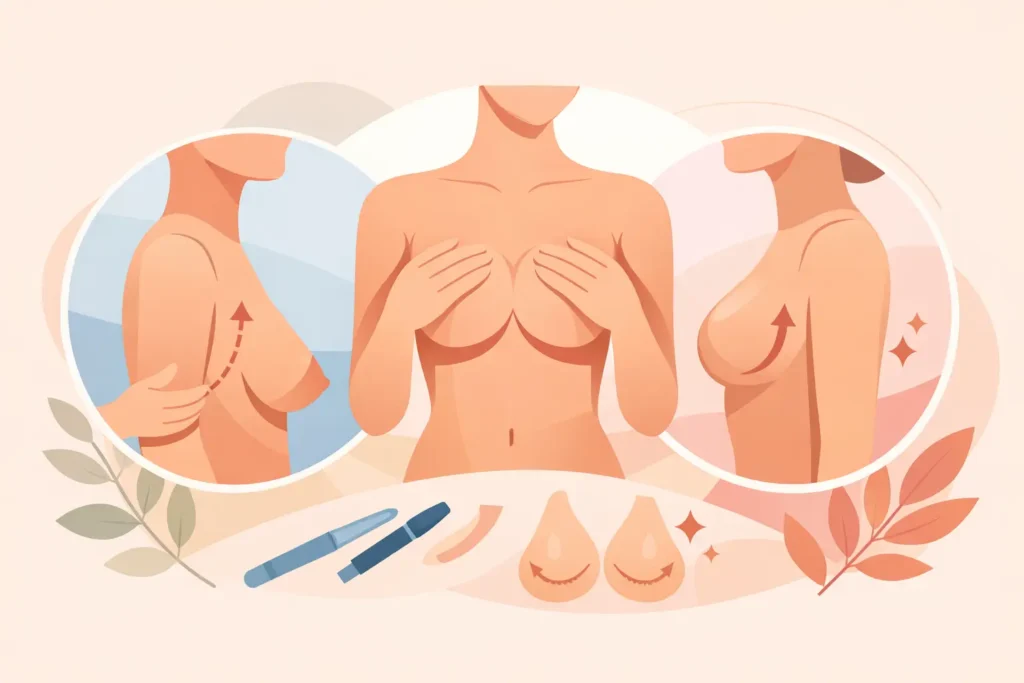
A breast lift, or mastopexy, reshapes and repositions the breast tissue and skin envelope. It is designed to address drooping, stretched skin, downward-pointing nipples, and a loss of upper breast fullness that often follows pregnancy, weight changes, aging, or genetics. If your breast size feels appropriate in clothing and your concern is more about position than volume, a lift alone may be the most elegant solution.
What a breast lift without implants can and cannot do
A lift can create a more youthful breast shape by elevating the nipple-areola complex, removing excess skin, and improving projection through reshaping your existing tissue. In many women, that alone creates a meaningful change in how the breasts sit in a bra, swimsuit, or fitted dress. The result often feels lighter, more balanced, and more refined.
What it cannot do is add substantial volume to the upper pole in the way an implant can. Some patients expect a lifted breast to look as full at the top as a push-up bra makes it appear. Surgery can improve contour, but it cannot manufacture fullness that is not already present in your natural tissue. This is one of the most important trade-offs to understand before moving forward.
That trade-off is not necessarily a drawback. For many patients, especially those who favor natural-looking enhancement, avoiding implants means fewer long-term maintenance considerations and a result that remains closely aligned with their original anatomy.
Who is the best candidate in this breast lift without implants guide
The best candidates usually have enough natural breast volume to create an attractive shape once the breast is elevated. In practical terms, this means the breast has tissue, but the tissue has descended. You may notice that your nipples sit below the breast crease, your breasts appear deflated after pregnancy or weight loss, or your bras are doing most of the lifting.
You may be an excellent candidate if you are happy with your breast size but not with the position or firmness. Patients with mild to significant sagging can still be candidates, although the technique will vary depending on severity. Skin quality matters as well. Thinner, more elastic skin behaves differently from thicker or more damaged skin, and that influences both planning and longevity.
Timing matters. If you are planning a future pregnancy or significant weight loss, it may make sense to wait. Both can change the breast again and soften the result. A lift can absolutely be worthwhile after children and weight changes, but ideally it is done when your body is relatively stable.
How surgeons choose the right lift technique
There is no single breast lift for every patient. Technique is chosen based on how much sagging is present, where the nipple currently sits, the size of the areola, skin excess, and the amount of reshaping required.
A crescent or limited lift may be appropriate for very mild drooping, but that applies to a narrow group of patients. A vertical lift, sometimes called a lollipop lift, is often used when there is moderate sagging and enough tissue to reshape without extensive horizontal skin removal. For more significant ptosis, an anchor-pattern lift gives the surgeon greater control over skin removal, nipple position, and contour.
Patients are often concerned about scars, and understandably so. But in breast surgery, scar pattern should follow what is necessary for a beautiful shape, not the other way around. A smaller scar is not automatically a better operation if it leaves the breast under-corrected or oddly shaped. In experienced hands, a well-planned scar often fades very well, while the improved contour becomes the feature patients notice most.
Will your breasts look smaller after a lift?
Sometimes, yes – or at least they may appear smaller. A lift removes skin, tightens the envelope, and repositions tissue. The cup size may not change dramatically, but the breast can look more compact, higher, and more proportionate. For women who are used to volume sitting low in the bra, this can feel different at first.
That said, many patients also feel that their breasts look better, not less. Clothes fit more elegantly. The waist appears more defined. The entire upper body can look more balanced because the breast shape is younger and more centered on the chest wall.
If you want more upper fullness, a lift alone may not fully satisfy that goal. In that case, augmentation with an implant or fat transfer may be discussed. But if your priority is natural contour over fullness, a lift without implants often provides the most harmonious answer.
Recovery and what to expect after surgery
Recovery after a breast lift is usually manageable, especially when patients prepare well and follow instructions carefully. Most experience tightness, swelling, bruising, and a temporary sense of heaviness or pressure in the chest. Pain is often less severe than many expect and is typically controlled with medication and rest.
You will likely wear a surgical bra and limit strenuous movement for several weeks. Early walking is encouraged, but lifting, intense exercise, and upper-body strain should wait until cleared by your surgeon. Swelling improves gradually. The breast shape also evolves over time, settling into a softer and more natural appearance over the following weeks and months.
For international patients, thoughtful planning matters even more. Travel timing, support during the first days of recovery, and postoperative follow-up should be organized in advance. A refined surgical experience is not only about the procedure itself. It is also about feeling guided, safe, and well cared for throughout the journey.
Scars, sensation, and long-term results
Every breast lift creates scars, but not every scar heals the same way. Your genetics, skin tone, aftercare, sun exposure, and tension on the incision all influence healing. Most scars are more visible early on, then soften and fade over several months. Good scar management can make a meaningful difference.
Changes in nipple sensation can happen. In many cases they are temporary, but some patients experience longer-lasting sensitivity changes. This is part of informed surgical decision-making. A careful consultation should cover not only the likely benefits, but also these less glamorous realities.
As for longevity, a lift can last for many years, but it does not stop aging. Gravity, weight fluctuation, pregnancy, and skin quality continue to play a role over time. A precise operation can reposition the breast beautifully, yet maintaining that result depends partly on factors no surgeon can fully control. Supportive bras, weight stability, and realistic expectations help preserve the outcome.
Questions worth asking at your consultation
The best consultation is not a sales conversation. It is a surgical planning discussion grounded in anatomy, aesthetics, and honesty. Ask whether a lift alone can achieve your goal or whether you are likely to miss upper fullness without an implant. Ask what scar pattern is recommended and why. Ask how your nipple position, breast asymmetry, skin elasticity, and tissue quality affect your options.
You should also ask to see results in patients with a similar starting point. That matters more than looking at idealized before-and-afters from very different body types. If you are traveling for surgery, discuss your stay length, follow-up schedule, and what support is available if questions arise once you return home.
This is where surgeon judgment becomes especially valuable. A meticulous, reconstructive-minded approach tends to prioritize balance, shape, and tissue handling in a way that supports graceful, natural-looking outcomes. At Dr. Hebert Lamblet Plastic Surgery, that philosophy aligns naturally with patients who want enhancement without exaggeration.
Is a breast lift without implants right for you?
If you want your breasts to sit higher, look firmer, and feel more youthful – but still look like your breasts – a lift without implants may be the right path. It is often the choice for women who want refinement rather than enlargement, and who value proportion over dramatic change.
The right answer depends on your tissue, your goals, and your tolerance for the trade-offs involved. A lift can beautifully restore shape, but it should be chosen for what it truly offers, not for what an implant would do differently. When the plan matches the anatomy, the result tends to feel effortless, elegant, and deeply personal.
The most satisfying breast surgery is rarely the one that changes everything. It is the one that restores what felt lost and lets you recognize yourself again with a little more confidence.
