
 Português
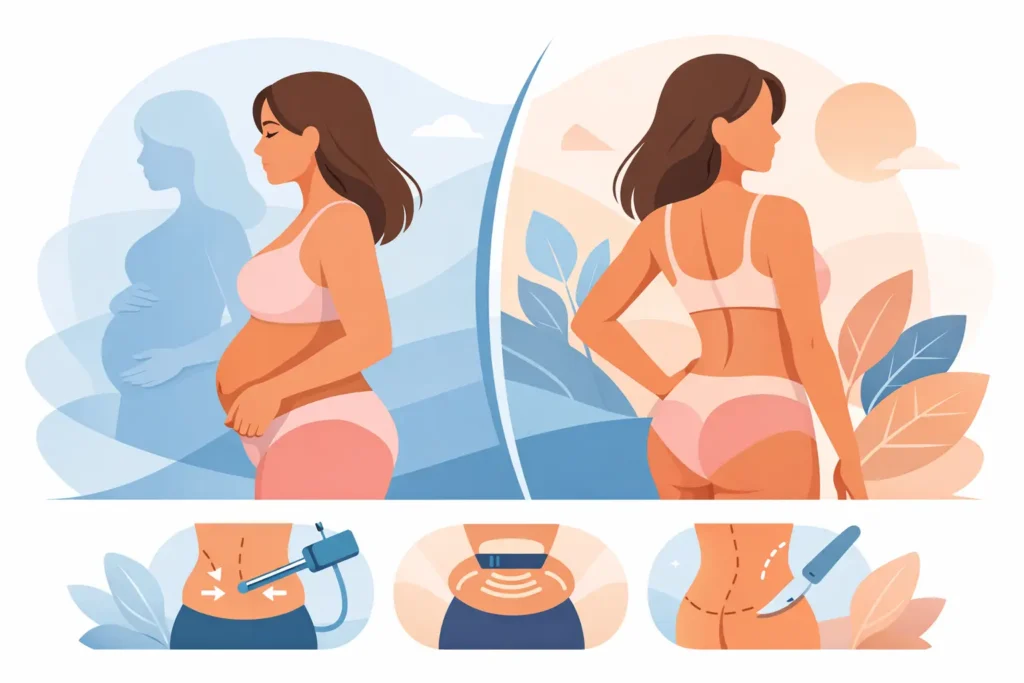
A pregnancy can change the body in ways that diet, exercise, and time alone cannot always address. For women considering post pregnancy body contouring options, the goal is rarely to look like someone else. It is to feel at home in their own silhouette again – with a result that respects the strength, beauty, and individuality of the body that carried a child.
Pregnancy affects every patient differently. Some women are most concerned by loose abdominal skin or separated muscles. Others notice a loss of breast volume, changes in breast position, stubborn fat deposits, or skin laxity around the waist, thighs, and arms. A thoughtful surgical plan begins by identifying which concerns are structural, which are related to skin quality, and which can be improved through contour refinement.
When Is the Right Time for Body Contouring After Pregnancy?
The right timing is personal, but patience is part of achieving a refined result. Most patients should allow their body time to recover from pregnancy, delivery, breastfeeding, and the natural hormonal shifts that follow. Weight should be stable, breastfeeding should be complete, and you should feel physically and emotionally ready to focus on your own recovery.
For many women, this means waiting at least six months after childbirth and often longer if breastfeeding. A consultation with a board-certified plastic surgeon can clarify whether your tissues have recovered sufficiently and whether your current weight is a stable baseline for surgery.
Future pregnancies also matter. A later pregnancy can stretch the abdominal skin and muscles again and may alter the result of a tummy tuck or breast procedure. This does not mean surgery is impossible before family planning is complete, but it is an important discussion to have openly. The best plan supports your life as it is now while accounting for what may come next.
Post Pregnancy Body Contouring Options for Common Concerns
There is no single procedure that is right for every mother. The most elegant results come from selecting procedures that address the specific changes pregnancy has created rather than treating the body with a one-size-fits-all approach.
Tummy Tuck for Loose Skin and Muscle Separation
A tummy tuck, also called abdominoplasty, is often considered when the abdomen has loose skin, persistent fullness, or muscle separation known as diastasis recti. During pregnancy, the vertical abdominal muscles can move apart to accommodate the growing uterus. Even a strong exercise routine may not fully repair this internal separation.
A tummy tuck can remove excess lower abdominal skin, tighten weakened or separated muscles, and create a smoother, firmer waistline. In some cases, liposuction is added to refine the flanks or upper abdomen. The trade-off is a permanent scar placed low on the abdomen, generally positioned to be concealed beneath underwear or a swimsuit. Scar quality improves over time, but it should be part of an honest surgical conversation.
Liposuction for Localized Fat Deposits
Liposuction is designed to refine areas of diet-resistant fat, not to replace weight loss. After pregnancy, many patients find that the waist, back, hips, thighs, or upper arms hold fullness differently than before. When skin elasticity is good, carefully performed liposuction can create smoother transitions and a more balanced contour.
If significant skin laxity is present, liposuction alone may not provide the level of tightening a patient hopes to see. Removing fat beneath loose skin can sometimes make laxity more visible. This is why expert assessment of skin quality is as important as identifying the area of fullness itself.
Breast Lift, Augmentation, or Both
Breast changes after pregnancy and breastfeeding can include volume loss, deflation in the upper breast, stretched skin, and nipples that sit lower than before. A breast lift reshapes and elevates the breast by removing excess skin and repositioning the nipple and areola. It is often the most appropriate choice when the main concern is ptosis, or sagging.
For patients who also want more fullness, especially at the upper pole of the breast, augmentation may be combined with a lift. Some women prefer a modest implant, while others may be candidates for autologous fat grafting to create subtle volume using their own tissue. The ideal choice depends on the existing breast tissue, skin elasticity, desired shape, and comfort with scars, implants, or staged treatment.
Body Lift or Thigh Contouring After Major Weight Changes
Some mothers experience substantial weight loss after pregnancy or following a longer health journey. In these cases, loose skin may extend beyond the abdomen to the outer thighs, buttocks, lower back, or arms. A body lift or thigh lift may be considered when skin laxity is extensive and less invasive contouring would not adequately reshape the area.
These operations involve more significant scars and a more involved recovery, but they can offer transformative improvement in proportion, comfort, and how clothing fits. The decision should be guided by skin excess, lifestyle demands, healing capacity, and the degree of correction desired.
Can Procedures Be Combined in a Mommy Makeover?
The phrase “mommy makeover” commonly describes a personalized combination of breast and body procedures, often including a tummy tuck, liposuction, breast lift, or breast augmentation. It is not a single operation or a fixed set of procedures. Its value lies in addressing several pregnancy-related concerns during one carefully planned surgical experience.
Combining procedures may reduce the need for separate anesthetics and recoveries. However, a longer operation is not automatically the better choice. Safety comes first, and the appropriate combination depends on your health, the extent of surgery, anticipated operative time, and the surgeon’s assessment. Sometimes staging procedures is the more prudent and comfortable path to an excellent result.
At Dr. Hebert Lamblet Plastic Surgery, surgical planning is centered on proportion, tissue quality, and natural-looking enhancement. The aim is never an exaggerated transformation. It is a silhouette that feels harmonious with your frame and reflects the confidence you want to carry forward.
Recovery: Planning for Support Is Part of the Procedure
Recovery after post-pregnancy contouring requires practical preparation, particularly for mothers with young children. Following abdominal surgery, patients should avoid lifting, strenuous exercise, and many everyday caregiving tasks for a period determined by their surgeon. Arranging help at home is not a luxury – it is an essential part of protecting your healing tissues and allowing your body to recover well.
Swelling, tightness, bruising, and temporary changes in sensation are expected after many contouring procedures. Early results can be encouraging, but the final contour develops gradually as swelling resolves and scars mature. Compression garments, follow-up appointments, incision care, and a gradual return to activity all contribute to a smooth recovery.
Patients traveling internationally for surgery should plan for sufficient time near their surgical team before returning home. This allows for early postoperative monitoring, dressing changes, and clear guidance before travel. A high-touch care plan brings valuable reassurance when surgery takes place away from home.
Choosing a Surgeon for a Natural, Lasting Result
Body contouring after pregnancy is both technical and artistic. A surgeon must understand how to repair muscle support, preserve blood supply, manage scars, and shape soft tissue with restraint. Equally, they must listen closely to what a patient sees when she looks in the mirror.
During consultation, be prepared to discuss your pregnancies, breastfeeding history, weight stability, medical conditions, previous surgeries, medications, and future family plans. You should also speak candidly about what bothers you, what you hope to improve, and what you do not want to change. Precise communication helps create a plan that is safe, proportionate, and genuinely yours.
The most meaningful result is not defined by a dramatic before-and-after image. It is the quiet confidence of wearing clothing comfortably, moving freely, and recognizing yourself with renewed ease.
