
 Português
A fuller, lifted silhouette rarely comes down to volume alone. Shape, proportion, and the way the waist, hips, and buttocks relate to each other are what make a result look elegant rather than obvious. That is why brazilian butt lift fat transfer remains one of the most nuanced body contouring procedures in aesthetic surgery.
Unlike implants, this procedure uses your own fat to enhance the buttocks while refining the areas where fat is removed. In skilled hands, it is not simply an augmentation. It is a sculpting procedure designed to create better balance through the torso, lower back, hips, and seat.
What brazilian butt lift fat transfer actually involves
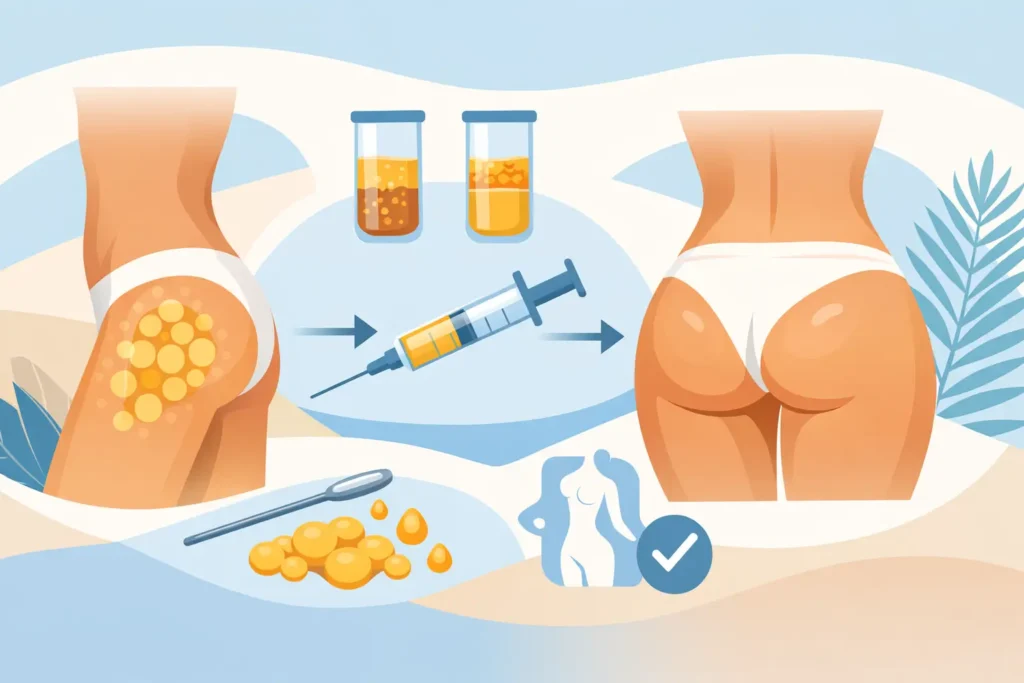
A Brazilian butt lift with fat transfer is a surgical procedure that combines liposuction with fat grafting. Fat is first removed from donor areas such as the abdomen, flanks, lower back, or thighs. It is then purified and strategically reinjected into the buttocks to improve projection, contour, and symmetry.
The artistry lies in the planning. Not every patient needs dramatic projection, and not every body benefits from the same distribution of volume. Some patients want a rounder upper pole. Others want more softness through the hips or better transition from the waist into the buttocks. The most refined results come from careful sculpting rather than adding as much fat as possible.
Because the procedure uses your own tissue, the look and feel are often more natural than with synthetic implants. There is also a second benefit that many patients appreciate – slimming selected areas with liposuction can make the final buttock shape appear even more enhanced.
Who is a good candidate for brazilian butt lift fat transfer?
The best candidate is not defined by one body type. A good candidate is someone in stable health, close to their goal weight, and realistic about what surgery can achieve. They should also have enough excess fat in donor areas to allow meaningful transfer.
This matters because the procedure depends on available fat. Very lean patients may not have enough donor material for the level of enhancement they want. In those cases, the conversation has to be honest. Sometimes a modest improvement is possible. Sometimes another contouring plan may be more appropriate.
Skin quality matters too. If the buttocks have significant sagging, fat transfer alone may not create the lift a patient expects. The term “lift” can be misleading. A Brazilian butt lift improves shape and projection, but it does not function like an excisional lift that removes loose skin.
Ideal candidates also understand the recovery. Fat grafting requires patience, temporary restrictions, and respect for the healing process. Patients looking for a fast fix with no downtime are rarely well suited to this surgery.
Why technique matters more than trends
The popularity of the procedure has led to a great deal of online imagery, much of it centered on exaggerated results. That can distort expectations. Beautiful outcomes are usually the ones that suit the patient’s frame, move naturally, and remain balanced over time.
A precise surgeon evaluates the entire body, not just the buttocks. Waist definition, lower back contour, hip dips, pelvic anatomy, and skin tone all influence the final effect. This is where surgical judgment matters. The goal is not simply to make the buttocks larger. It is to create a harmonious silhouette from every angle.
Safety is equally tied to technique. Fat transfer to the buttocks must be performed with meticulous attention to anatomy and modern surgical safety principles. Patients should feel comfortable asking direct questions about how the procedure is performed, how safety is prioritized, and what protocols guide decision-making.
What to expect before surgery
Consultation is where the procedure becomes personal. Your surgeon will assess your anatomy, discuss your goals, examine donor areas, and explain what level of change is realistic. This is also the time to review medical history, medications, prior surgeries, and lifestyle factors that may affect healing.
For international patients, planning deserves just as much care as the operation itself. Travel timing, accommodations, postoperative support, and recovery logistics all need to be organized in advance. A well-structured surgical experience reduces stress and allows you to focus on healing.
Patients are usually advised to stop smoking, avoid certain medications or supplements that increase bleeding risk, and maintain a stable weight. Significant weight fluctuation before or after surgery can affect the final contour.
The recovery process and why patience matters
Recovery after fat transfer is manageable, but it requires discipline. Swelling, bruising, soreness, and tightness in the liposuctioned areas are expected in the early phase. The transferred fat also needs time to establish a blood supply.
One of the most important instructions is to avoid prolonged direct pressure on the buttocks for a period recommended by your surgeon. That often means using special positioning when sitting or sleeping. It can feel inconvenient, but it supports fat survival during the critical early stage.
Compression garments are commonly worn to help control swelling and support the newly contoured areas. Walking is usually encouraged early, while more strenuous activity is restricted until healing is further along.
Results evolve gradually. The initial shape is affected by swelling, and not all transferred fat will survive long term. That is normal. A percentage of the grafted fat is naturally reabsorbed by the body, which is why experienced surgeons plan with this in mind rather than promising a fixed volume outcome.
Most patients start to appreciate their new contours within weeks, but refinement continues for months. The final result is worth judging only after swelling has settled and the surviving fat has stabilized.
Risks, limitations, and honest expectations
Every surgical procedure carries risk, and this one is no exception. Potential concerns include infection, asymmetry, contour irregularities, fat resorption, delayed healing, and the possibility of needing revision. There are also serious safety considerations specific to buttock fat grafting, which is why surgeon selection should never be based on price alone.
It is also important to understand the limits of the procedure. A Brazilian butt lift cannot override anatomy. Hip width, skeletal structure, tissue quality, and donor fat availability all set parameters. Digital trends may suggest otherwise, but surgical beauty still has to work with the body in front of the surgeon.
Weight changes after surgery can influence the outcome because transferred fat behaves like fat elsewhere in the body. If you gain weight, the area may enlarge. If you lose significant weight, volume may decrease. Long-term satisfaction is usually strongest in patients who maintain stable habits.
Natural-looking results are usually the most enduring
Patients seeking refinement rather than exaggeration are often the happiest in the long run. A result that looks aligned with your body can feel more sophisticated, age better, and blend more easily with future changes in weight or lifestyle.
This is especially relevant for patients traveling for surgery and investing in a full experience, not just a single procedure. The right plan should support confidence in real life – in fitted clothing, on the beach, and years later when trends have shifted. At Dr. Hebert Lamblet Plastic Surgery, that philosophy aligns closely with the idea that elegant body contouring should enhance your natural beauty rather than compete with it.
How to choose your surgeon
Credentials matter, but so does aesthetic judgment. You want a surgeon with clear experience in liposuction and fat grafting, a disciplined approach to safety, and a portfolio that reflects tasteful, consistent work. Ask to see results on patients with body types similar to yours. Ask how realistic goals are set. Ask what happens if the retention is less than expected.
The quality of care around the surgery matters too. Especially for out-of-town or international patients, attentive preoperative planning and structured postoperative support can make the experience feel calmer, safer, and more private.
A good consultation should leave you informed, not pressured. You should come away with a realistic understanding of what can be achieved, what recovery will require, and whether the proposed result truly fits your frame.
The best brazilian butt lift fat transfer results are not the ones that look instantly obvious. They are the ones that make the body appear more balanced, more sculpted, and unmistakably your own – only refined with precision.
