
 Português
Full cheeks can soften with age, a hollow under-eye area can make a well-rested person appear tired, and certain body contours may lose balance after weight change or pregnancy. Autologous fat grafting offers a refined way to address these concerns by using your own living tissue rather than a manufactured implant or injectable product. The goal is not to change who you are. It is to restore proportion, softness, and a more naturally refreshed appearance.
At Dr. Hebert Lamblet Plastic Surgery, fat grafting is approached as both a technical and artistic procedure. Every treatment plan considers the quality of the donor fat, the anatomy of the area being treated, and the degree of enhancement that will look harmonious from every angle.
What Is Autologous Fat Grafting?
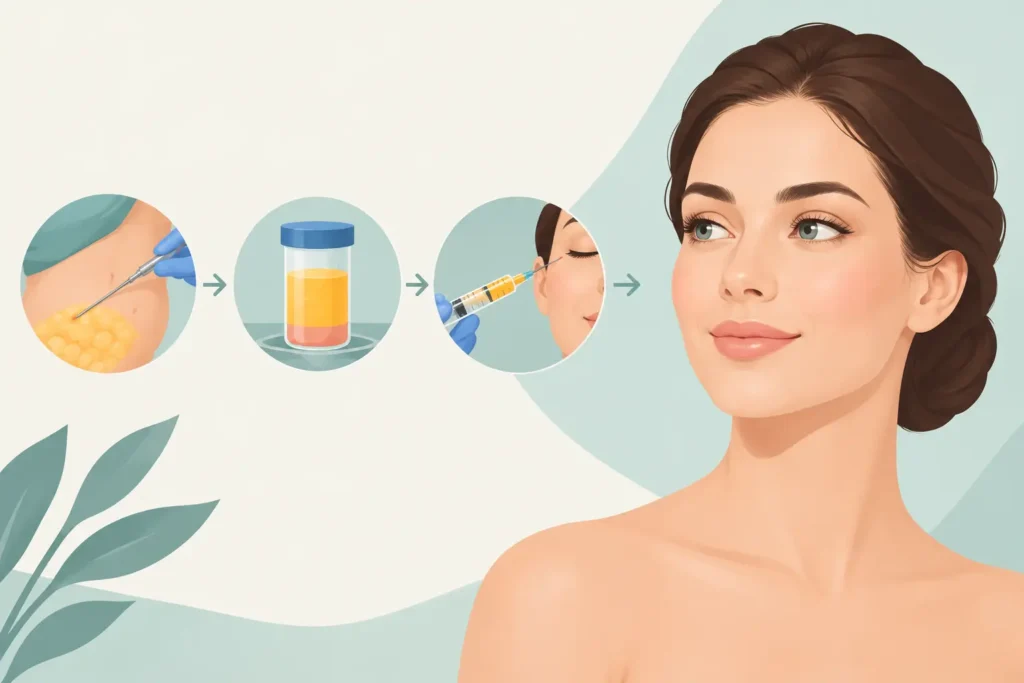
Autologous fat grafting, also called fat transfer or lipofilling, is a surgical technique that moves fat from one area of your body to another. Fat is gently removed through liposuction, commonly from the abdomen, flanks, thighs, or back. It is then purified and placed in carefully controlled amounts where additional volume is desired.
Because the transferred material comes from your own body, there is no concern about an allergic reaction to a foreign filler. Fat can also provide a softness and integration with surrounding tissue that is especially valuable in the face, breasts, buttocks, hands, and areas affected by contour irregularities.
The procedure has two components: selective contouring of the donor area and precise enhancement of the recipient area. That combination can be appealing to patients who want to refine one region while restoring volume elsewhere. Still, fat grafting is not a substitute for major weight loss, nor should it be viewed as a way to reshape every concern at once.
Guide to Autologous Fat Grafting: Where It Can Be Used
Fat grafting is exceptionally versatile, but the best use depends on your anatomy, aesthetic goals, and the amount of available donor fat. In facial rejuvenation, it may restore volume to the cheeks, temples, jawline, lips, chin, or under-eye region. These are areas where age-related volume loss can alter facial balance before skin laxity becomes the primary concern.
For breast procedures, fat transfer may soften implant edges, improve mild asymmetry, restore upper-pole fullness, or provide a modest increase in breast volume. It can also be used as part of reconstructive care after breast surgery. Patients seeking a substantial size increase may be better served by implants, a staged approach, or another procedure entirely.
In body contouring, fat grafting is central to Brazilian butt lift surgery, where purified fat is used to improve the shape and projection of the buttocks. Safety depends on disciplined technique, appropriate patient selection, and a surgeon who follows established principles for safe fat placement. Fat may also correct depressions, asymmetry, or volume loss in selected areas of the body.
The hands are another often-overlooked treatment area. When tendons and veins become more visible over time, carefully placed fat can create a smoother, more youthful appearance while preserving the character of the hands.
The Consultation Determines More Than Volume
A thoughtful consultation is where an attractive idea becomes an appropriate surgical plan. Your surgeon will assess skin quality, facial or body proportions, previous procedures, medical history, and the presence of sufficient donor fat. Photographs and a detailed discussion of your goals help establish whether fat grafting can meet your expectations.
Not every patient is an ideal candidate. Very lean patients may have limited donor fat, while patients who smoke or use nicotine products may face impaired healing and reduced fat survival. Significant weight fluctuations can also affect the long-term appearance of transferred fat. In some cases, a hyaluronic acid filler, implant, facelift, breast lift, or another procedure may offer a more predictable solution.
This is also the time to discuss subtlety. Natural-looking enhancement is often achieved through restraint, particularly in delicate facial areas. A refined result should look like you at your best, not like a feature has been overfilled.
How the Procedure Is Performed
Fat grafting is performed under local anesthesia with sedation or general anesthesia, depending on the treatment area and whether it is being combined with another procedure. The donor area is first infiltrated with a solution designed to minimize discomfort and bleeding. Fat is then removed through small incisions using a gentle liposuction technique.
After harvesting, the fat is processed to separate viable fat cells from excess fluid, blood, and damaged tissue. The purified fat is placed through tiny entry points in small, layered passes. This method gives each parcel of fat access to the blood supply it needs to survive.
The placement process requires patience and anatomical precision. Injecting a large amount of fat into one location is not the same as sculpting volume. A skilled surgeon builds shape gradually, considers how the tissues move with expression, and avoids creating heaviness or unevenness.
What to Expect During Recovery
Recovery has two distinct parts because both the donor and recipient areas need time to settle. The liposuction area may feel sore, swollen, and bruised, much like a deep workout or bruise. Compression garments are commonly recommended to support healing and contour in the donor area.
The grafted area will also swell initially, and this can make the early result appear fuller than intended. Facial swelling often improves significantly within several weeks, though subtle changes continue for months. When fat is transferred to the buttocks, patients must follow specific postoperative positioning instructions to protect the grafted fat and support a safe recovery.
Most patients can return to light daily activity within days to a couple of weeks, depending on the extent of surgery. Strenuous exercise, pressure on treated areas, and travel plans should be discussed individually. For patients traveling to Brazil, allowing adequate time for in-person follow-up before flying home is a meaningful part of safe planning.
Fat Survival and Long-Term Results
A portion of transferred fat naturally reabsorbs during the first several months after surgery. The exact percentage varies from patient to patient and can be influenced by technique, the recipient area, blood supply, smoking status, and postoperative care. Surgeons account for this expected settling, but no ethical practice can promise that every transferred cell will survive.
Once the retained fat has established a blood supply, it behaves like fat elsewhere in your body. The result can be long-lasting, though it will still respond to major weight gain or loss and continue to age with you. Some patients choose a second session when additional volume or refinement is desired.
This trade-off is central to understanding fat grafting. It offers living, natural tissue and can improve more than one area in a single operation, but its final volume is less immediately predictable than some synthetic options. The right choice depends on whether you prioritize softness, durability, donor-site contouring, adjustability, or a combination of these benefits.
Preparing for a Safer, More Beautiful Result
Your preparation supports both healing and fat survival. Maintain a stable weight, stop smoking and nicotine use as instructed, complete required medical testing, and arrange practical help for the first stage of recovery. Be open about medications, supplements, previous surgeries, and any history of clotting concerns.
Most importantly, choose a board-certified plastic surgeon with experience in the specific area you want treated. Beautiful fat grafting is not defined by volume alone. It is defined by safety, balance, and the judgment to recommend a different approach when that will serve you better.
A personal consultation can clarify whether autologous fat grafting is the elegant, lasting refinement you are seeking and establish a plan designed around your anatomy, lifestyle, and vision for yourself.
