
 Português
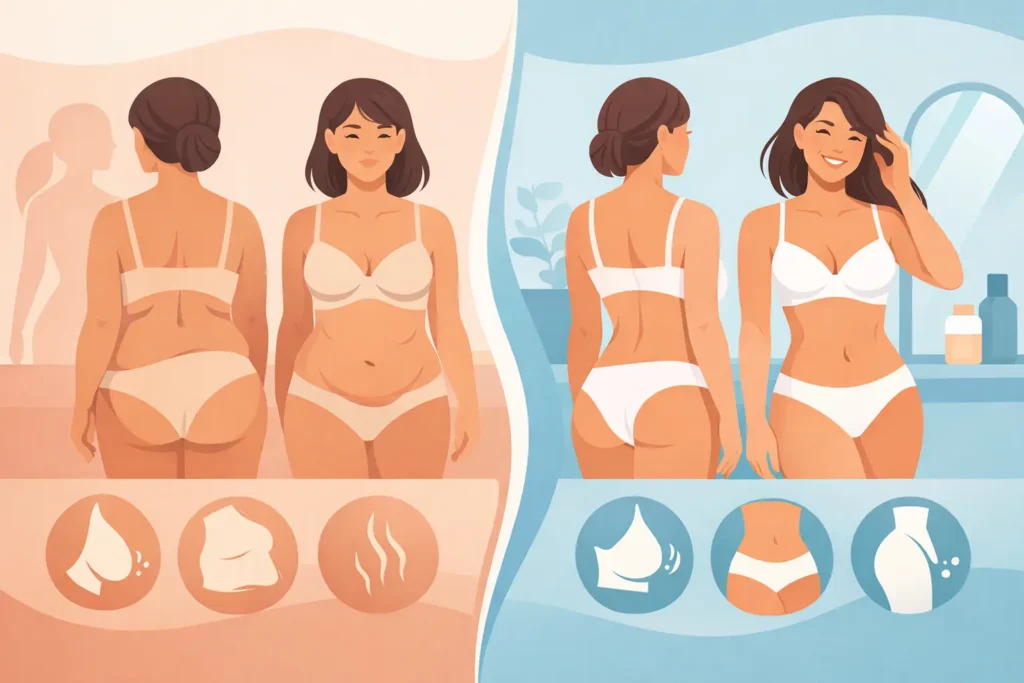
What most women want from mommy makeover before after examples is not a dramatic reveal. They want clarity. They want to know what actually changes after pregnancy, breastfeeding, weight shifts, and time – and what can realistically be restored with thoughtful surgery.
The most useful before-and-after examples do not simply show a flatter abdomen or lifted breasts. They show proportion, restraint, and a result that still looks like the patient. For many women, that is the real goal: a body that feels more aligned with how they see themselves, not a body that looks surgically altered.
What mommy makeover before after examples really show
A mommy makeover is not one single procedure. It is a customized surgical plan that usually combines breast surgery with abdominal contouring and, in some cases, liposuction or fat transfer. Because of that, before-and-after examples vary widely.
One patient may need a breast lift and tummy tuck after multiple pregnancies. Another may have good breast position but significant loss of upper breast fullness, making augmentation the better option. A third may benefit most from liposuction to refine the waist and flanks rather than more extensive contouring. The most revealing examples are the ones that match a patient not only by age or body type, but by anatomy, skin quality, and aesthetic priorities.
That is why comparison photos should be interpreted carefully. A strong result for one patient may look subtle on another. Skin elasticity, muscle separation, scar quality, and existing breast volume all affect the final outcome.
The most common patterns seen in before-and-after results
Breast restoration usually means shape, not just size
Pregnancy and breastfeeding often change the breasts in two ways at once: the skin stretches while volume shifts or decreases. In before-and-after examples, this can create a common misunderstanding. Patients sometimes assume implants are the answer whenever the breasts look deflated. In reality, many women need a lift, either alone or combined with implants, to restore a balanced shape.
A good breast result looks centered, supported, and proportionate to the frame. The nipple position is often elevated, the lower pole is refined, and upper fullness is restored in a way that looks elegant rather than overfilled. In more natural cases, the difference is noticeable but not obvious to anyone who does not know surgery was performed.
The abdomen improves through contour and repair
The abdominal portion of a mommy makeover is often where the most transformative visual change occurs. Before-and-after examples frequently show excess lower abdominal skin, laxity around the navel, and a widened waistline caused by muscle separation. After surgery, the abdomen appears flatter, firmer, and smoother.
What patients sometimes miss in photos is the role of muscle repair. When the rectus muscles have separated, tightening them can improve waist definition and support the abdominal wall. This is one reason the result can look more refined than weight loss alone. It is not only about removing skin. It is about restoring structure.
Liposuction refines the transition zones
Liposuction is often the detail that makes a result feel polished. In mommy makeover before after examples, the biggest difference may not be in the center of the abdomen, but in the waist, lower back, and flanks. These surrounding areas influence whether the silhouette looks square, soft, athletic, or hourglass.
That said, liposuction is not a substitute for tummy tuck surgery when there is loose skin or muscle separation. This is a common point of confusion. The right combination depends on whether the issue is fat, skin, muscle, or all three.
How to read mommy makeover before after examples like a careful patient
The best before-and-after galleries are not the most extreme. They are the most honest.
Look first at posture and consistency. Are the patient positions similar from one image to the next? Is the lighting comparable? If photos rely on dramatic angles, shadows, or different undergarments, they are less useful for decision-making.
Next, study proportion instead of a single feature. A beautiful mommy makeover rarely succeeds because one area changed in isolation. The breast shape should suit the torso. The waist should flow naturally into the hips. The abdomen should look smoother without appearing unnaturally tight.
It also helps to look for examples with scars visible, at least to some degree. A refined surgeon does not hide the reality of incisions. Instead, the goal is to place them thoughtfully and help them mature as discreetly as possible over time.
Finally, pay attention to the timeline. A six-week photo and a one-year photo tell different stories. Early swelling can obscure definition, while scars often soften significantly in the months that follow. Immediate improvement is only part of the picture.
What a natural-looking result depends on
Natural-looking enhancement is not accidental. It comes from surgical judgment.
A surgeon must decide not only what to add or remove, but what to preserve. Too much volume in the breasts can overpower the torso. Too aggressive an abdominal pull can create tension and an operated appearance. Over-liposuctioned flanks may flatten the body in a way that looks less feminine, not more.
The most sophisticated before-and-after examples reflect restraint. They show a patient who looks refreshed, balanced, and confident. This is especially important for women who want to wear fitted clothing, swimwear, or evening dresses without feeling that their surgery announces itself.
For international patients, this level of refinement matters even more. If you are traveling for surgery, you want confidence not only in technical ability but in aesthetic philosophy. Precision, planning, and consistency are essential.
Why one patient’s example may not predict your result
Patients often search for someone who looks exactly like them in a gallery. That can be helpful, but only to a point.
Your result will depend on factors photos cannot fully capture: tissue thickness, scar tendency, the degree of breast droop, the quality of your skin, your healing response, and whether you plan future pregnancies or weight changes. Even ribcage shape and pelvic width influence how the final contour reads.
This is why consultation matters more than inspiration alone. Before-and-after examples can show possibilities. They cannot replace a surgical examination and an individualized plan.
An experienced plastic surgeon will also discuss trade-offs. A tummy tuck can create a beautiful abdominal contour, but it does involve a scar. A breast lift can restore position beautifully, but it may change upper fullness unless combined with augmentation. Liposuction can refine shape, but skin contraction has limits. Honest planning leads to better satisfaction because expectations stay aligned with reality.
Questions worth asking when reviewing examples with a surgeon
When you discuss photos in consultation, ask which procedures were likely performed and why. Ask whether the patient had muscle repair, implants, fat transfer, or a lift. Ask how long after surgery the after photo was taken.
You should also ask what the surgeon would do differently for your anatomy. That answer reveals a great deal. A careful surgeon does not force every patient into the same recipe. At Dr. Hebert Lamblet Plastic Surgery, this personalized approach is central to creating results that feel elegant rather than standardized.
If you are traveling from the US or Europe, this conversation should also cover recovery planning. A beautiful result depends not just on surgery day, but on safe follow-up, accommodation, healing time, and realistic scheduling before you fly home.
When before-and-after examples are most helpful
These examples are especially valuable when you are still defining your goals. Some women begin the process thinking they want to be “smaller” and later realize they primarily want lifting and better waist definition. Others assume their concern is loose skin, only to learn that breast shape is the feature affecting how they feel in clothing.
Photos can help you put language to what you see. They can help you decide whether you prefer a subtle restoration, more pronounced curves, or a result that prioritizes athletic definition. They can also help you understand what level of change feels right for your lifestyle, privacy preferences, and long-term image of yourself.
The most useful mindset is this: look at examples to refine your taste, not to script your body.
A well-executed mommy makeover should feel deeply personal. The best after photo is not the most dramatic one in a gallery. It is the one that makes a woman stand a little taller, dress with ease, and recognize herself again with greater confidence.
