
 Português
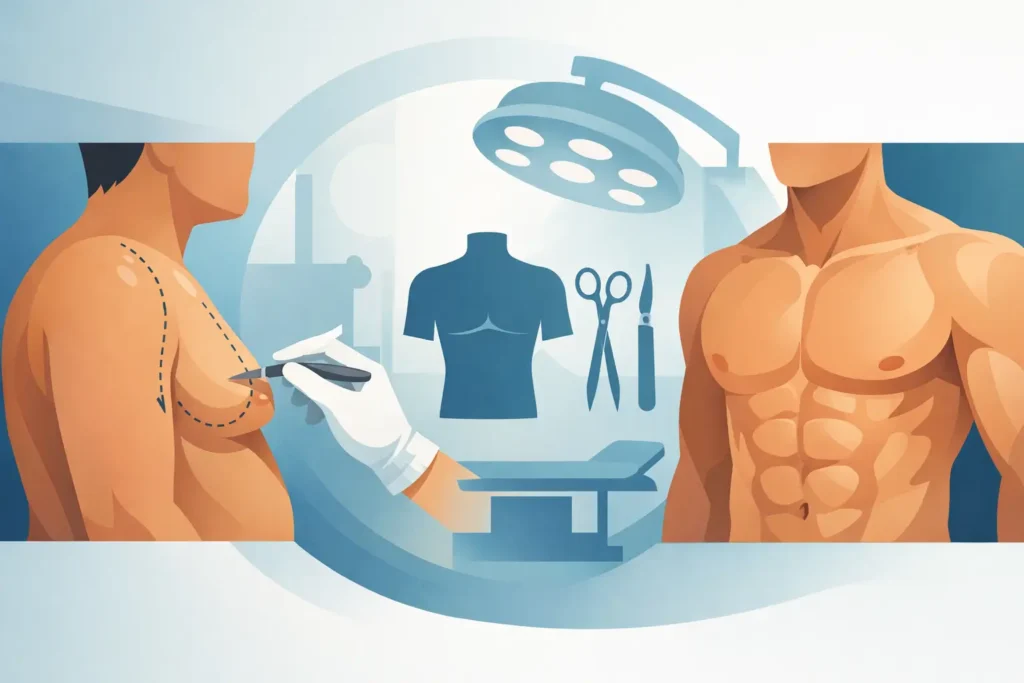
For many men, a well-developed chest is not simply about fitness. It is about feeling comfortable in a fitted shirt, at the beach, or during an intimate moment. When persistent breast fullness remains despite weight loss and training, male gynecomastia surgery can offer a precise, lasting solution – restoring a flatter chest contour that looks naturally masculine rather than surgically altered.
Gynecomastia is common, yet the concern is often deeply personal. Some patients have lived with it since adolescence and have learned to conceal their chest for years. Others notice a change later in life, after weight fluctuations, hormonal shifts, medication use, or changes in body composition. A thoughtful surgical plan begins by understanding the cause of the fullness and the quality of the tissues involved, not by applying the same operation to every patient.
What Is Gynecomastia?
Gynecomastia is the enlargement of male breast tissue. It may affect one side more than the other, which can make asymmetry especially noticeable. The condition can involve firm glandular tissue beneath the nipple, excess fatty tissue across the chest, loose skin, or a combination of all three.
This distinction matters. Fatty chest fullness may improve with liposuction alone, while firm glandular tissue generally requires direct surgical removal. Patients with significant skin laxity, often following substantial weight loss, may need skin excision and nipple repositioning to achieve a refined result. The best approach depends on the anatomy in front of the surgeon, not a predetermined technique.
Although gynecomastia is usually benign, a medical evaluation is appropriate when breast enlargement is new, painful, rapidly changing, or limited to one side. Hormonal conditions, certain medications, supplements, alcohol, and anabolic steroid use can contribute. Surgery can improve the contour, but identifying and addressing an underlying cause remains part of responsible care.
Who Is a Good Candidate for Male Gynecomastia Surgery?
An appropriate candidate is generally in good overall health, at a stable weight, and bothered by chest fullness that has not responded to lifestyle changes. Men considering surgery should be prepared to pause smoking and nicotine use, as these can impair wound healing. They should also disclose all medications, supplements, hormone treatments, and previous use of performance-enhancing substances.
The consultation is where aesthetic goals and surgical reality meet. A meticulous examination assesses breast tissue, skin quality, nipple position, chest-wall shape, and natural asymmetry. Photographs and measurements help guide planning, but the discussion should also address what a successful outcome means to the individual patient.
For some men, the ideal result is a subtly flatter chest that preserves a natural softness. For others, particularly those who train regularly, the priority is a cleaner pectoral outline and greater definition through clothing. Neither goal should lead to overcorrection. Removing too much tissue can leave a hollowed or uneven appearance, which may look less natural than the original concern.
How the Procedure Is Tailored
Liposuction for Chest Contouring
When excess fat is a primary factor and the skin has good elasticity, liposuction can contour the chest through small, discreet incisions. A fine cannula is used to remove fat gradually and sculpt the transition from the chest into the underarm area. This is not simply a matter of volume reduction. The goal is to preserve smoothness, symmetry, and a chest shape that remains balanced with the shoulders and abdomen.
Glandular Tissue Excision
Firm tissue directly beneath the areola often does not respond to liposuction. In these cases, excision may be performed through a carefully placed incision at the lower edge of the areola. This allows the surgeon to remove the gland while maintaining support beneath the nipple complex. Precise tissue handling is essential to avoid contour irregularities and preserve a natural-looking result.
Skin Reduction for More Advanced Cases
When the skin has stretched significantly, removing fat and glandular tissue alone may leave looseness behind. Skin reduction surgery can create a firmer chest, though it involves longer scars. This is one of the most meaningful trade-offs to discuss during consultation: a more complete improvement in shape may require scars that are more visible initially. With thoughtful incision placement, diligent healing care, and time, scars typically continue to mature.
What to Expect During Recovery
Male gynecomastia surgery is commonly performed as an outpatient procedure, meaning patients return to their recovery accommodations the same day with appropriate support. Mild swelling, bruising, tightness, and temporary changes in sensation are expected during the early phase. A compression garment is usually worn to support healing, help manage swelling, and encourage the skin to adapt to the newly contoured chest.
Many patients return to desk-based work and light daily activity within about a week, depending on the extent of surgery and their comfort level. More strenuous exercise, chest training, and heavy lifting require a longer pause. The exact timeline should be individualized, particularly after skin reduction procedures or more extensive tissue removal.
A chest may look flatter immediately, but it is not yet the final result. Swelling can fluctuate, and the tissues need time to settle. Early firmness beneath the nipple area or along areas of liposuction can be part of normal healing. Follow-up visits allow the surgical team to monitor progress, advise on scar care, and address concerns before they become disruptive to recovery.
Results That Look Like You
The most successful male chest contouring does not announce itself. It allows the patient to wear clothing with greater ease, move more freely, and feel that his proportions finally reflect the effort he puts into his health and appearance. A naturally masculine result respects the width of the chest, the position of the nipples, and the individual’s underlying musculature.
Results can be long-lasting when body weight remains stable and contributing factors are managed. However, future hormonal changes, substantial weight gain, or continued use of medications or substances associated with breast enlargement may affect the chest over time. Surgery addresses existing tissue; it cannot prevent every future change in the body.
Planning Surgery in Brazil With Confidence
For international patients, surgical expertise is only one part of the experience. Clear communication, realistic scheduling, private accommodations, and a structured recovery period are equally important. Patients traveling for surgery should allow sufficient time in Brazil for preoperative assessment, the procedure, early follow-up, and safe clearance before flying home.
At Dr. Hebert Lamblet Plastic Surgery, treatment planning is designed to provide attentive guidance from the first consultation through recovery. This high-touch approach is especially valuable when patients are arranging care from the United States or Europe and want reassurance that every practical detail has been considered alongside their aesthetic goals.
Questions Worth Asking at Your Consultation
A consultation should leave you informed, not pressured. Ask which tissues are contributing to your chest fullness, whether liposuction alone is appropriate, where scars may be placed, and what degree of asymmetry can realistically be improved. It is also reasonable to ask how the surgeon manages contour irregularities, postoperative swelling, and follow-up care if you are traveling internationally.
Most of all, choose a surgeon who listens carefully to what has made you self-conscious and explains the plan with candor. A refined chest contour is not defined by dramatic change. It is defined by proportion, precision, and the quiet confidence of feeling at ease in your own body.
