
 Português
A face can look tired long before it develops deep lines. Hollowing beneath the eyes, flattening through the cheeks, and a softer jawline often reflect a gradual loss of facial volume – not simply loose skin. For patients seeking a refined, natural-looking answer, facial fat transfer benefits extend beyond filling a crease. The procedure uses your own living tissue to restore the gentle fullness that gives the face a rested, youthful character.
Also known as autologous fat grafting, facial fat transfer can be performed as a focused treatment or thoughtfully paired with facial rejuvenation surgery. The goal is never to make the face look overfilled. It is to restore balance, softness, and proportion with a plan tailored to your anatomy.
What Facial Fat Transfer Can Improve
Facial aging is three-dimensional. Over time, facial fat pads shift and diminish, the cheeks may lose projection, and the temples or under-eye area can appear more hollow. Even a beautifully performed facelift may benefit from volume restoration when these changes are present.
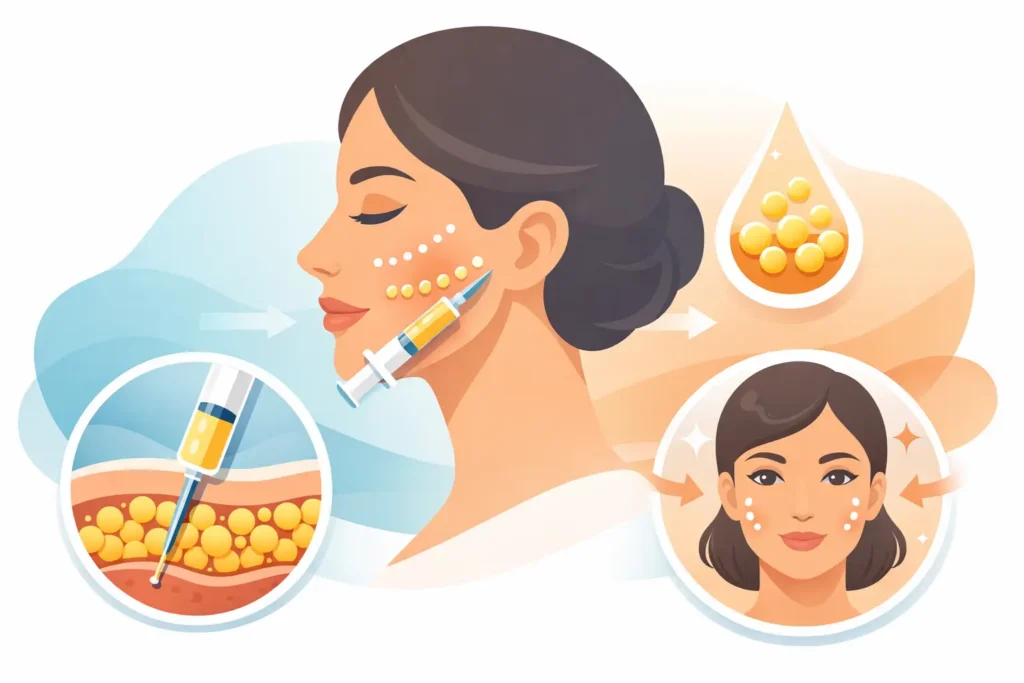
Fat transfer begins with gentle liposuction to collect a small amount of fat, commonly from the abdomen, flanks, or thighs. The tissue is then carefully purified and placed in precise layers of the face. This allows a plastic surgeon to shape transitions between facial features rather than simply add volume in one visible area.
The treatment may be considered for the cheeks, temples, tear troughs, jawline, lips, chin, and areas around the mouth. Every area requires a different approach. The under-eye region, for example, demands exceptional restraint and technical precision because the skin is thin and small changes can be noticeable.
Facial Fat Transfer Benefits That Look Like You
The most meaningful benefit is the quality of the result. Because the transferred fat is your own tissue, it can create a softness that is particularly suited to broad facial volume restoration. Instead of changing who you are, a well-planned procedure can help your face look less depleted and more in harmony with the way you feel.
Natural volume with your own tissue
Fat grafting uses tissue from your body, which appeals to patients who prefer an alternative to synthetic volumizing products. Once healing is complete and the grafted fat has established its blood supply, the surviving cells become part of the treated area.
This does not mean every transferred cell remains permanently. A portion of the grafted fat is naturally reabsorbed during the early healing phase. For that reason, experienced surgeons plan placement carefully, accounting for the way the tissue settles without pursuing an exaggerated result.
More than a single-line correction
Dermal fillers can be excellent for selective, temporary refinement, such as subtle lip enhancement or addressing a small area of volume loss. Fat transfer is often better suited to patients who need restoration across several regions, including the cheeks, temples, and lower face.
This broader approach can improve the relationship between facial features. Restoring cheek volume may soften the appearance of nasolabial folds. Adding gentle fullness at the temples can make the upper face appear more balanced. Treating the face as a whole is what keeps the result elegant.
Lasting results for the right patient
After the initial period of reabsorption, retained fat can provide long-lasting volume. Results are influenced by the technique used, the quality of the recipient tissue, healing, and changes in body weight over time. Significant weight loss or gain can affect transferred fat just as it affects natural facial fat.
For patients looking for a more enduring approach than repeated filler appointments, this may be one of the strongest facial fat transfer benefits. Still, longevity should never be mistaken for permanence without change. The face continues to age, and every patient’s biology is different.
A complementary contouring benefit
Because fat is harvested through liposuction, treatment may provide a modest contouring improvement in the donor area. This should be viewed as a welcome secondary benefit rather than the primary reason to choose facial fat transfer. The amount of fat required for facial grafting is often limited, so it is not a substitute for a dedicated body-contouring procedure.
When Fat Transfer May Be Better Than Fillers
The choice between facial fat transfer and dermal fillers should be based on your goals, timeline, anatomy, and comfort with surgery. Fillers are non-surgical, require little downtime, and can be a practical option for patients who want a temporary adjustment or are not ready for a procedure.
Fat transfer requires a surgical setting, anesthesia considerations, and a more involved recovery. In exchange, it can offer a more comprehensive restoration of facial volume using your own tissue. It may be particularly appropriate when a patient has pronounced hollowing, is already undergoing a facelift or eyelid procedure, or wishes to avoid ongoing filler maintenance.
There is no universal answer. Some patients benefit most from fat grafting, while others are better served by carefully selected fillers. In certain cases, the two can be used at different stages of a long-term facial rejuvenation plan.
Pairing Fat Grafting With Facial Rejuvenation Surgery
A youthful face depends on both contour and position. A facelift addresses descended tissue and laxity through the cheeks, jawline, and neck. Eyelid surgery can refresh heavy or puffy eyelids. Fat grafting restores volume where the face has become hollow.
When performed together, these procedures can create a more complete result. A lifted face without restored volume may still appear somewhat skeletal in patients with significant volume loss. Conversely, adding volume without addressing substantial skin laxity may not achieve the level of refinement a patient seeks.
The best surgical plan is individualized. It begins with an examination of skin quality, bone structure, existing volume, facial movement, and the changes that concern you most. At Dr. Hebert Lamblet Plastic Surgery, this level of planning is central to creating results that appear balanced rather than overcorrected.
Recovery and What to Expect
Swelling and bruising are expected after facial fat transfer, with the degree varying by treatment area and whether other procedures are performed at the same time. The face may initially appear fuller than the final result, and the donor area will also need time to heal from liposuction.
Most patients can expect the earliest swelling to improve over the first couple of weeks, while subtle refinement continues over several months. A surgeon may recommend avoiding pressure on treated areas, sleeping with the head elevated, and following individualized instructions regarding activity, medications, and skin care.
Patience matters. The final appearance should be judged after the transferred fat has settled and the tissues have healed. Early fullness is part of the process, not an indication of the finished result.
Safety, Candidacy, and Realistic Expectations
Like any surgical procedure, fat transfer carries potential risks, including unevenness, prolonged swelling, contour irregularities, infection, and partial fat resorption. These concerns are reduced through careful patient selection, meticulous handling of the tissue, and precise placement, but they cannot be eliminated entirely.
Healthy adults with realistic expectations are often good candidates. Patients should be prepared to maintain a stable weight and follow recovery guidance closely. Smoking or nicotine use can impair healing and may prevent safe surgery until discontinued as directed.
A consultation should also address whether facial hollowness is truly caused by volume loss. Under-eye shadows, for instance, may result from skin laxity, pigmentation, anatomy, or prominent fat pads. Adding volume is not automatically the right solution. A thoughtful surgeon will recommend treatment only when it supports the natural architecture of your face.
The most successful facial rejuvenation is rarely the one that announces itself. It is the one that allows others to see you looking rested, confident, and beautifully familiar – with every decision guided by your individual features rather than a trend.
