
 Português
A softer jawline can change the entire expression of the face. Even when the skin still looks smooth, early jowls may create a tired, heavier, or less defined appearance in photographs and profile views. The best treatments for jowls are not determined by age alone. They depend on whether the concern is driven by volume loss, skin laxity, descended facial tissue, excess neck fat, or a combination of these changes.
The most elegant result is rarely about making the jawline look artificially sharp. It is about restoring proportion between the cheek, jaw, chin, and neck so the face appears rested, refined, and unmistakably like you.
Why Jowls Develop
Jowls form as the structural support of the lower face gradually changes. Over time, collagen and elastin decline, allowing the skin to become less firm. The ligaments that hold facial tissue in place can loosen, and the cheek fat pads may descend toward the jawline. At the same time, volume can diminish around the temples, cheeks, and pre-jowl area, making any sagging more noticeable.
Genetics, sun exposure, weight fluctuations, smoking, and the natural aging process all influence when these changes appear. Some patients notice early jowling in their 30s or 40s, while others retain a defined jawline much longer. A fuller face may develop heaviness along the jaw sooner, whereas a leaner face may show hollowing beside the chin before significant skin laxity is present.
This distinction matters. Treating lax skin with filler alone, for example, can add unwanted weight to the lower face. Treating volume loss with skin-tightening technology alone may produce only a subtle improvement. The right plan begins with a precise assessment of the face as a whole.
Best Treatments for Jowls: Choosing the Right Approach
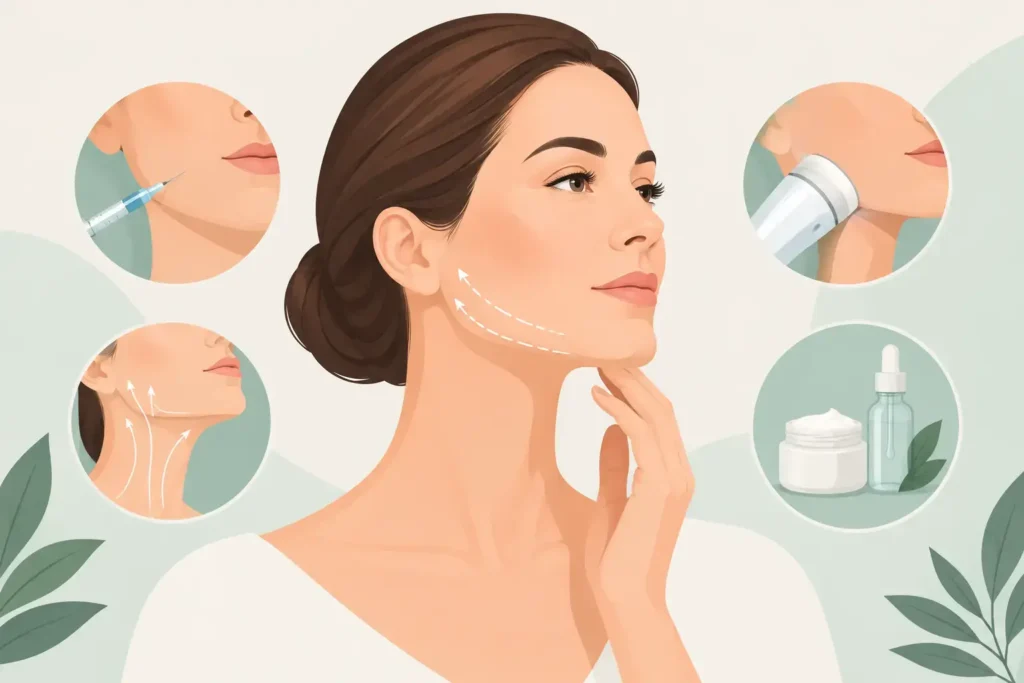
There is no single treatment that suits every degree of jowling. Non-surgical options can be valuable for early changes or for patients seeking a gradual refresh. Surgical facial rejuvenation becomes the more reliable choice when descended tissue and loose skin are the dominant concerns.
Dermal Fillers for Early Pre-Jowl Hollowing
In selected patients, strategic dermal filler can improve early jowls by restoring support around the chin and along the jawline. Filling the pre-jowl depression, the small hollow that often develops on either side of the chin, can create a smoother transition across the lower face. Chin refinement may also improve facial balance and make the jawline appear more continuous.
This approach works best when skin quality remains good and jowling is mild. It is not a substitute for lifting descended tissue. Overfilling the jawline in an attempt to disguise significant laxity can produce a broad or heavy result, which is the opposite of the refined contour most patients want.
Autologous Fat Grafting for Restored Facial Balance
Autologous fat grafting uses a patient’s own carefully prepared fat to restore volume in areas where support has been lost. Rather than concentrating volume only at the jawline, fat grafting may be used to enhance the cheeks, temples, chin, or pre-jowl area, depending on the facial anatomy.
For the right candidate, this can create a soft, natural-looking improvement that complements the face rather than changing its character. Because some transferred fat is naturally reabsorbed during healing, the technique requires thoughtful planning and meticulous placement. It is often especially valuable when facial deflation contributes to the appearance of jowls.
Energy-Based Skin Tightening for Subtle Laxity
Radiofrequency, ultrasound, and similar skin-tightening treatments can encourage collagen remodeling in patients with mild laxity. These options generally involve little downtime and may suit someone who is not ready for surgery or wants to preserve results after a more comprehensive procedure.
Their limitations should be understood clearly. Energy-based treatments do not reposition deeper facial tissues, remove a meaningful amount of excess skin, or replicate a facelift result. Improvement is typically gradual and modest, and more than one treatment may be recommended. For early laxity, however, a subtle increase in firmness may be worthwhile.
Neck Liposuction and Chin Contouring
Sometimes the jawline looks less defined because of fullness beneath the chin or along the upper neck rather than jowls alone. In patients with good skin elasticity, carefully performed neck liposuction can reveal a cleaner transition from chin to neck. Chin augmentation with filler, fat grafting, or an implant may also be considered when a small or recessed chin weakens the profile.
These procedures address contour, not significant facial descent. When loose neck skin or prominent platysma banding is present, a more comprehensive neck lift or facelift may provide a more harmonious result.
When a Deep Plane Facelift Is the Strongest Option
When jowls are established, a facelift remains the most dependable treatment for meaningful and lasting improvement. A well-performed facelift does not simply pull the skin tighter. It repositions the deeper facial layers that have descended over time, then redrapes the skin without excessive tension.
A Deep Plane facelift is designed to release and elevate deeper facial structures, helping restore the cheek, jawline, and midface in a natural direction. This approach can be particularly effective for jowls because it addresses the underlying tissue descent that creates them. It may be combined with a neck lift to refine the jaw-neck angle and correct laxity below the chin.
The goal is not a visibly operated appearance. A refined facelift should preserve the patient’s identity while restoring a more rested, balanced version of their features. The quality of the result depends on surgical judgment, anatomy, tissue handling, and a plan tailored to the individual rather than a fixed technique applied to every face.
Recovery requires patience. Bruising and swelling are expected in the early period, and social downtime commonly ranges from two to three weeks, although subtle swelling can continue to settle over several months. Incisions are typically placed around the ear and within natural contours so they become increasingly discreet as they heal. A consultation should include a candid discussion of scarring, healing, anesthesia, and the realistic longevity of the result.
Combining Treatments for a More Complete Result
Jowls are rarely an isolated issue. A lower face lift may look more balanced when paired with facial fat grafting, eyelid surgery, skin resurfacing, or carefully selected non-surgical treatments. Conversely, a patient with minimal laxity may achieve an excellent refresh with conservative filler, fat grafting, and skin-quality treatments without surgery.
The most successful plans avoid treating every concern aggressively. A face that has lost volume may need restoration, while a face that has become heavy may need repositioning rather than more volume. A skilled facial assessment identifies what should be lifted, what should be supported, and what should be left untouched.
Questions to Ask at Your Consultation
A meaningful consultation should go beyond selecting a procedure from a menu. Ask what is causing the jowls in your case, whether non-surgical treatment can realistically meet your goals, and how the proposed approach will affect the neck, cheeks, and profile. Reviewing before-and-after photographs of patients with similar facial anatomy can also help establish whether a surgeon’s aesthetic aligns with your preference for natural-looking enhancement.
For patients traveling internationally, planning deserves the same level of care as the procedure itself. At Dr. Hebert Lamblet Plastic Surgery, international patients can discuss their treatment timeline, recovery needs, and travel considerations in advance, allowing for a more composed and supported experience in Brazil.
The right treatment for jowls should leave you looking refreshed rather than altered. Whether that means a subtle restoration of volume or a carefully performed Deep Plane facelift, the most rewarding decision is one made with clear expectations, expert guidance, and respect for the face you already recognize as your own.
