
 Português
A beautifully restored cheek, a softer hollow beneath the eyes, or a more balanced silhouette can feel remarkably personal. For patients considering using their own tissue rather than an implant or synthetic filler, the central question is understandable: Is fat transfer long lasting? In many cases, yes. Once transferred fat establishes a reliable blood supply and survives the healing period, it can remain for years and may be considered a lasting component of your result.
The more precise answer is that longevity depends on how much of the grafted fat survives, where it is placed, how your body heals, and how stable your weight remains afterward. Fat transfer is not simply an injection. It is a surgical process that combines careful harvesting, meticulous preparation, and precise placement to create refined, natural-looking volume.
Is Fat Transfer Long Lasting in Every Area?
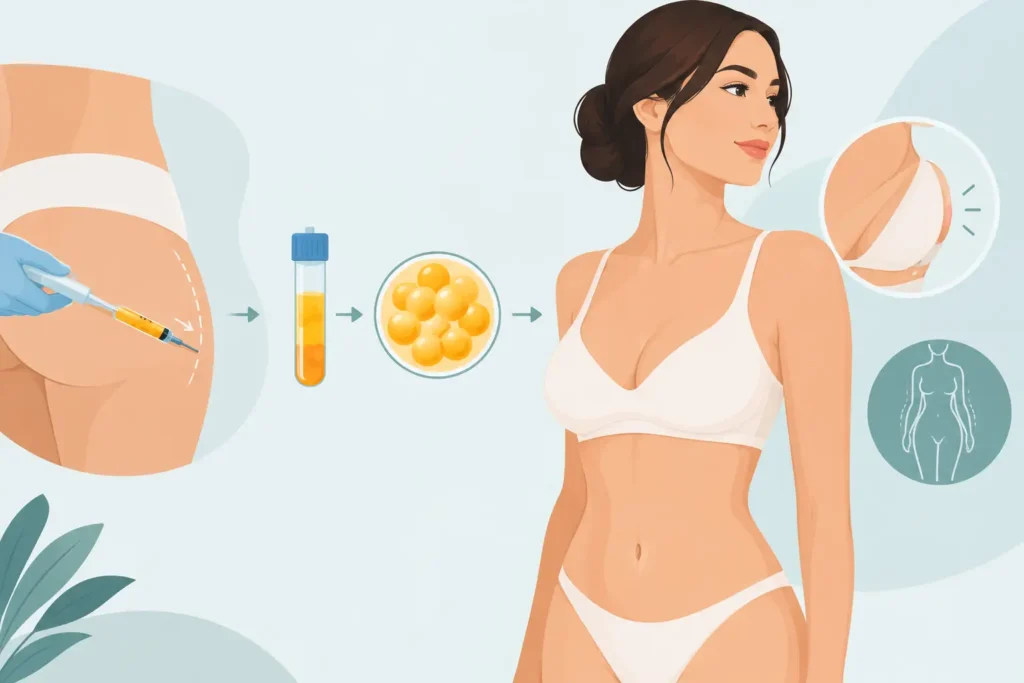
Autologous fat grafting uses fat collected from one area of the body, often the abdomen, flanks, thighs, or back, and transfers it to an area needing more volume or contour. It may be used for facial rejuvenation, breast enhancement or correction, hip contouring, and buttock enhancement.
Not every transferred fat cell will survive. During the first several months, the body absorbs a portion of the graft. This is expected and is one reason an experienced surgeon plans placement with restraint, anatomical understanding, and a clear vision for how the tissues will settle. The fat cells that establish circulation become living tissue in their new location.
For the face, long-term volume retention can provide an elegant alternative or complement to temporary injectables for carefully selected patients. In the breasts and body, fat transfer can create subtle, soft enhancement and help refine transitions that may be difficult to achieve with implants or liposuction alone. The appropriate technique and expected degree of retention differ by treatment area, so results should always be discussed in the context of your individual anatomy and goals.
Why Technique Has Such a Strong Influence on Results
The lasting quality of fat transfer begins well before the fat is placed. Harvesting must be gentle enough to protect viable fat cells. The collected tissue is then processed to separate usable fat from excess fluid, oil, and blood. Finally, the surgeon places tiny amounts of fat in carefully layered passes rather than depositing a large volume in one location.
This precision matters because grafted fat needs access to oxygen and circulation as it heals. Small, evenly distributed parcels are more likely to integrate with the surrounding tissue than a concentrated deposit. Overfilling is not a shortcut to a better result. It can compromise the refined contour patients want and may affect the predictability of healing.
A thoughtful plan also respects proportion. A youthful, rested face does not require exaggerated fullness. Similarly, body contouring should enhance the patient’s existing frame, not obscure it. The finest fat transfer results look like they belong to you: softened, balanced, and harmonious from every angle.
What Happens During the First Year?
Early swelling can make the treated area appear fuller than its eventual result. Bruising and tenderness vary according to the donor area, treatment area, and extent of the procedure. In the first weeks, your body is recovering from both liposuction and grafting, so patience is essential.
The initial months are when the most noticeable change in volume occurs. Some of the transferred fat is naturally reabsorbed, while the surviving cells stabilize. Most patients gain a much clearer sense of their outcome after several months, although final maturation can continue for up to a year depending on the area treated and the scope of surgery.
This healing timeline is one reason a surgeon should never promise an exact percentage of retention. Biology is individual. A meticulous technique can improve predictability, but no ethical surgeon can eliminate the natural variability of fat graft survival.
Can a Second Session Be Needed?
Sometimes, particularly when a patient desires more volume or is correcting a significant contour deficiency, a staged approach is appropriate. A second session may also be considered if the first treatment heals more conservatively than anticipated.
That does not mean the initial procedure has failed. In aesthetic surgery, refinement is sometimes the most responsible route to a graceful result. During consultation, your surgeon can explain whether your goals are best served by one transfer, a staged plan, or another treatment approach entirely.
Weight Changes and the Longevity of Fat Transfer
Surviving fat cells behave like fat cells elsewhere in the body. If you gain a significant amount of weight, they can enlarge. If you lose a substantial amount of weight, they can shrink. This is particularly relevant for patients seeking facial fat grafting, breast fat transfer, or body contouring after a period of weight loss.
Maintaining a stable, healthy weight helps protect the balance of your result. It is not about pursuing perfection or avoiding normal fluctuations. Rather, it means scheduling surgery when your lifestyle and weight are reasonably stable, then supporting your recovery with consistent nutrition, hydration, and medical guidance.
Aging also continues. Facial fat transfer can restore volume lost over time, but it cannot stop skin laxity, changes in bone structure, or the gradual effects of sun exposure and time. In some patients, combining fat grafting with procedures such as a facelift, eyelid surgery, or skin-focused treatments creates a more complete and enduring rejuvenation plan.
Recovery Habits That Support a Beautiful Result
Your surgeon’s postoperative instructions are specific to your procedure and should always take priority. In general, recovery focuses on protecting the grafted area while allowing the donor sites to heal properly. Patients should avoid pressure on a freshly grafted area when instructed to do so, especially after larger-volume body procedures.
Smoking and nicotine exposure can impair circulation and healing, which is particularly concerning when the goal is to support delicate grafted tissue. Alcohol, certain supplements, medications, and strenuous exercise may also need to be limited during the early recovery period. A well-organized recovery plan is especially valuable for patients traveling internationally, as it allows adequate time for early follow-up before returning home.
It is equally important to have realistic expectations about scars and donor areas. Liposuction access points are small, but they still require attentive care. Swelling in donor areas may persist longer than patients expect, even when the transferred fat begins to settle beautifully.
Is Fat Transfer the Right Choice for You?
Fat transfer can be an exceptional option for patients who want natural-feeling volume, have sufficient donor fat available, and appreciate that the final outcome develops gradually. It also offers the advantage of contouring the donor area as part of the procedure.
It may be less suitable for someone seeking a highly precise, very large, or immediately predictable increase in volume. Very lean patients may not have enough donor fat for the desired correction. Patients with significant skin laxity may need a lifting procedure in addition to volume restoration. For others, temporary filler, an implant, or a different surgical strategy may better match their goals.
Safety must guide every decision. Fat grafting for the body, particularly the buttocks, requires rigorous technique, appropriate patient selection, and adherence to current safety standards. Your consultation should include an open discussion of surgical setting, anesthesia, recovery, potential complications, and the specific method recommended for you.
A Consultation Should Answer More Than “How Long Will It Last?”
The most valuable consultation considers the whole picture: the quality of your skin, existing volume, body proportions, medical history, lifestyle, and the change you hope to see in the mirror. Before-and-after photographs can be helpful when they show patients with similar anatomy and goals, but your treatment plan should never be copied from someone else’s.
At Dr. Hebert Lamblet Plastic Surgery, this conversation is approached with the care it deserves. For patients traveling to Brazil, thoughtful planning around consultation, surgery, recovery, and follow-up can make the experience feel more assured and personal.
Fat transfer is best understood as a precise investment in your own tissue, not a promise of permanent perfection. With skilled planning, attentive recovery, and stable long-term habits, it can offer lasting volume that evolves gracefully with you.
