
 Português
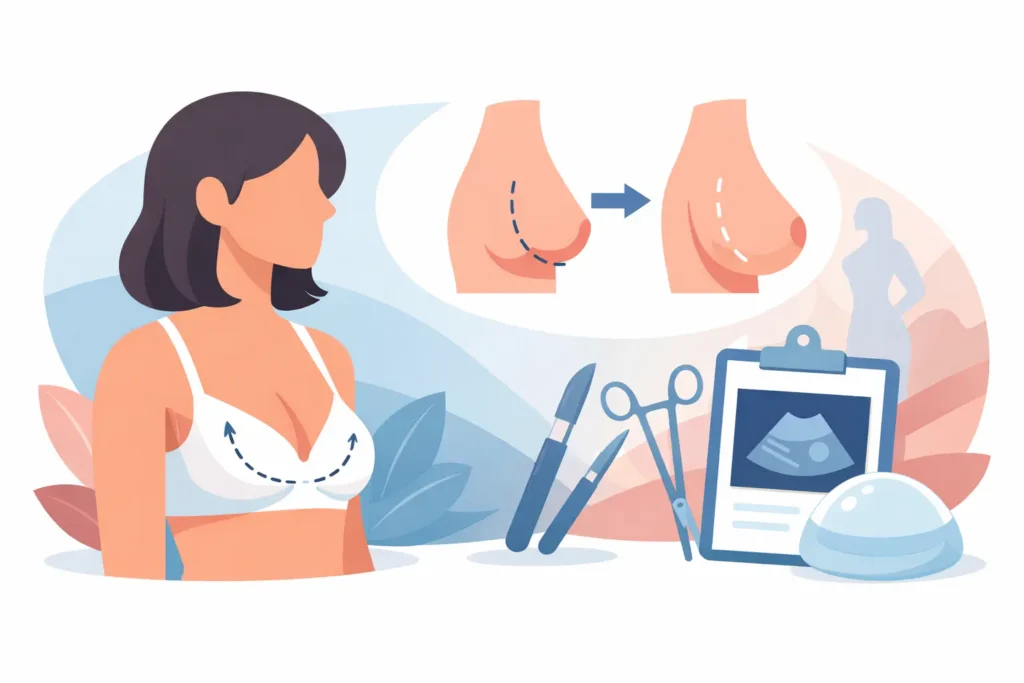
A change in breast shape can feel deeply personal. It may follow pregnancy, breastfeeding, weight loss, aging, or simply reflect proportions that have never felt fully aligned with your frame. This guide to breast reshaping surgery is designed to bring clarity to a decision that deserves both thoughtful consideration and exacting surgical care.
Breast reshaping is not one procedure or one aesthetic ideal. It is a tailored approach to restoring, enhancing, reducing, lifting, or refining the breasts in a way that respects your anatomy and supports a naturally balanced silhouette. The most beautiful results do not announce themselves as surgery. They look harmonious, feel appropriate for the patient, and remain grounded in careful planning.
What Breast Reshaping Surgery Can Address
Breast reshaping surgery is an umbrella term for procedures that alter breast volume, position, contour, or symmetry. Some patients want fuller upper-pole volume after breastfeeding. Others want to relieve the physical burden of heavy breasts, correct asymmetry, or restore a youthful position without creating an overfilled appearance.
The right procedure depends on skin quality, existing breast tissue, nipple position, chest width, body proportions, and the outcome you envision. A precise consultation should assess all of these factors rather than recommending a standard solution.
Breast augmentation
Breast augmentation increases volume with implants or, in select cases, fat transfer. It can enhance cleavage, improve proportionality, and replace volume lost after pregnancy or weight changes. Implant choices include different profiles, shapes, and materials, each influencing how the breasts sit on the chest and how much projection they create.
For patients seeking a subtle enhancement, the goal may be a soft, proportionate contour rather than a dramatic increase in cup size. Fat grafting can offer modest volume enhancement and refined contouring, although not every patient has enough donor fat or the tissue characteristics required for this approach.
Breast lift
A breast lift, or mastopexy, reshapes and elevates the breast by removing excess skin and repositioning the nipple-areola complex. It is often chosen when the breast has lost firmness or sits lower on the chest following pregnancy, significant weight loss, or the natural effects of time.
A lift improves position and shape, but it does not significantly add volume. When a patient has both laxity and volume loss, combining a lift with augmentation may create a more complete restoration. The trade-off is that a combined procedure is more complex and requires careful surgical judgment to protect healing and preserve an elegant result.
Breast reduction
Breast reduction removes excess breast tissue, fat, and skin to create lighter, more balanced breasts. While aesthetic refinement is an important benefit, many patients also seek reduction because of neck, shoulder, or back discomfort, bra strap grooves, skin irritation, and limitations during exercise.
The procedure can provide meaningful physical relief while improving breast shape and position. As with a lift, scars are a necessary consideration. Their length and placement depend on the degree of reduction and the amount of skin that must be reshaped.
Correcting asymmetry or prior surgery
No pair of breasts is perfectly identical. However, more noticeable differences in size, shape, nipple position, or chest-wall contour can often be improved through a customized surgical plan. Breast reshaping may also involve revision surgery for concerns such as implant displacement, capsular contracture, changes after a previous augmentation, or dissatisfaction with an earlier result.
Revision cases require a particularly detailed assessment. Previous scar tissue, implant history, and tissue quality influence what can be achieved safely in a single operation.
Choosing the Right Breast Reshaping Procedure
A meaningful consultation should begin with your goals, not a predetermined procedure. Bring forward the practical and emotional reasons you are considering surgery. You may want to feel comfortable in fitted clothing, regain confidence after motherhood, reduce discomfort, or see a more balanced reflection in the mirror. Each motivation is valid, and each should inform the treatment plan.
Your surgeon will evaluate breast volume, degree of ptosis or drooping, skin elasticity, nipple placement, and the relationship between the breasts and the rest of your body. Photography and measurements help guide the discussion, particularly when selecting implant dimensions or planning a lift pattern.
It is also wise to discuss what surgery cannot promise. Implants do not stop the effects of aging, pregnancy, weight fluctuation, or gravity. A breast lift cannot make severely stretched skin behave like youthful skin indefinitely. Fat grafting has limits in how much volume can be retained. The aim is not perfection. It is a result that looks refined, feels authentic to you, and is built on realistic expectations.
The Details That Shape a Natural Result
Natural-looking breast surgery is not defined by one implant size, one incision, or one breast shape. It comes from proportion. A surgeon must consider shoulder width, rib cage dimensions, soft-tissue coverage, waistline, hip balance, and the amount of projection that suits your body.
For augmentation, larger implants are not always the answer to a desire for fuller breasts. An implant that exceeds the support of the skin and breast tissue can increase the likelihood of visible rippling, downward displacement, or an appearance that feels too heavy for the frame. In some cases, a modest implant paired with a lift creates a more enduring and graceful result than an oversized implant alone.
Incision planning is equally individual. An augmentation may be performed through an incision in the breast crease, around the areola, or occasionally through the underarm, depending on anatomy and the surgical plan. Lifts and reductions require scars in patterns that correspond to the degree of reshaping needed. A skilled surgeon places these incisions with concealment and long-term healing in mind, but scars cannot be eliminated. They typically mature gradually over many months.
Preparing for Surgery With Confidence
Thoughtful preparation supports a smoother experience. Before surgery, your care team may request laboratory testing, a medical evaluation, breast imaging when appropriate for your age and history, and adjustments to certain medications or supplements. Nicotine use is a serious concern because it can compromise circulation and healing. Patients are generally asked to stop smoking, vaping, and using nicotine products well before surgery.
Plan for practical support at home, especially during the first few days. You will need someone to drive you after anesthesia and help with meals, medications, and daily tasks that require lifting or reaching. If you are traveling for surgery, allow sufficient time in the area for preoperative evaluation, early follow-up appointments, and clearance before returning home.
International patients benefit from a coordinated plan that accounts for accommodations, local transportation, recovery assistance, and safe timing for air travel. At Dr. Hebert Lamblet Plastic Surgery, this level of organization is treated as part of patient care, not an afterthought.
Recovery After Breast Reshaping Surgery
Recovery varies with the procedure and whether surgeries are combined. Augmentation alone may involve less extensive recovery than a lift or reduction, while revision surgery can have its own timeline. Most patients experience swelling, tightness, bruising, and temporary changes in sensation during the early healing period.
You will wear a supportive surgical bra and follow precise instructions for incision care, showering, sleeping position, and activity. Light walking is encouraged soon after surgery to support circulation, but strenuous exercise, heavy lifting, and upper-body training must wait until your surgeon confirms that healing is progressing appropriately.
Many patients return to desk-based work within one to two weeks, although feeling socially comfortable and fully mobile can take longer. Swelling settles in stages. Breast shape becomes more natural as tissues relax and implants, when used, settle into position. Final results should be judged patiently, often over several months rather than several weeks.
Understanding Risks and Long-Term Care
Every operation carries risks, including bleeding, infection, wound-healing concerns, changes in nipple or breast sensation, scarring, and asymmetry. Augmentation has additional considerations such as capsular contracture, implant rupture, rippling, and the possibility of future revision or replacement. Rare implant-associated conditions should also be discussed openly during consultation.
Choosing a qualified plastic surgeon, following recovery instructions closely, and attending scheduled follow-ups can help reduce avoidable risks. Still, no ethical surgeon should promise a risk-free procedure or guarantee an exact outcome.
Long-term breast care includes routine health screening appropriate for your age and personal history. Inform imaging providers about implants or prior breast surgery so they can select the proper techniques. Significant weight changes and future pregnancies may alter the surgical result, which is worth considering when deciding on timing.
The right time for breast reshaping surgery is when your goals are clear, your health is stable, and you feel ready to make the decision for yourself. A private consultation can turn broad hopes into a precise plan, allowing surgical artistry and attentive care to shape a result that feels quietly, unmistakably your own.
