
 Português
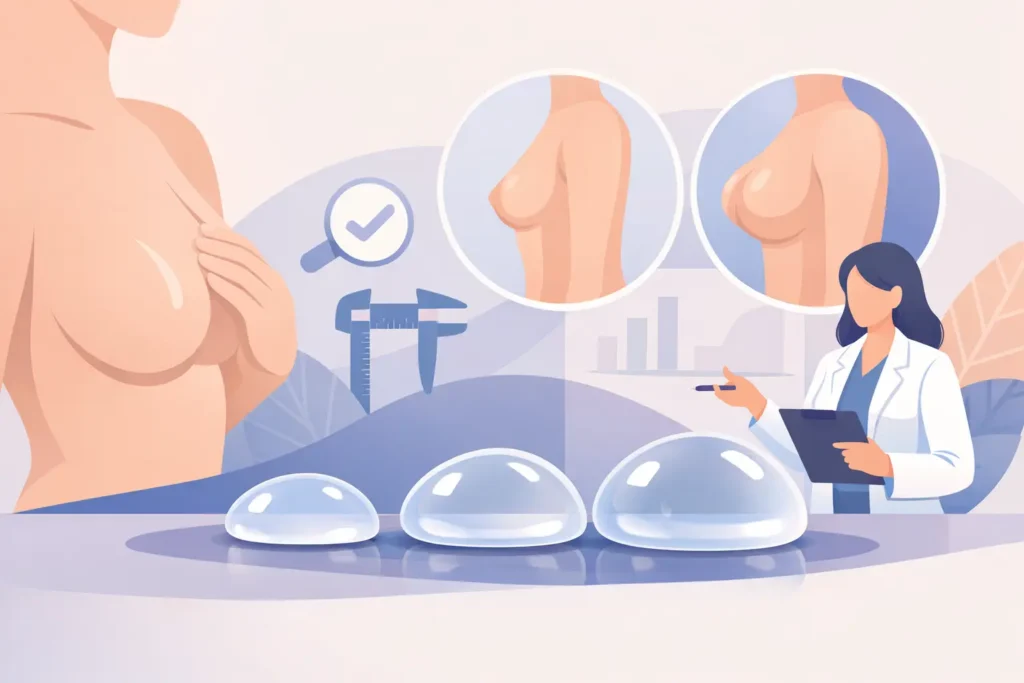
A few extra cubic centimeters can change far more than cup size. They can affect how balanced your frame looks, how natural your result feels, how clothing fits, and how confident you feel years after surgery. That is why learning how to choose breast implant size is not about picking a number that sounds attractive. It is about selecting a volume and shape that suit your anatomy, your goals, and your long-term comfort.
For many patients, this is the most emotional part of breast augmentation. You may know you want fuller breasts, but still feel unsure about what will look elegant on your body. That uncertainty is normal. The right decision is rarely based on trend, bra labels, or someone else’s result. It comes from a careful balance of proportion, tissue characteristics, implant dimensions, and aesthetic vision.
How to Choose Breast Implant Size Without Guesswork
The first thing to understand is that implant size is measured in cubic centimeters, not cup sizes. A patient might ask for a C cup, but cup sizing varies between lingerie brands, bra styles, and body proportions. The same implant volume can look subtle on one patient and much fuller on another.
This is why experienced plastic surgeons do not size implants in isolation. They assess your chest width, existing breast tissue, skin elasticity, rib cage shape, nipple position, and the amount of upper-pole fullness you want. In other words, the decision is architectural as much as aesthetic.
A smaller-framed woman with a narrow chest may achieve a beautifully full result with a moderate implant. A taller patient with broader shoulders may need more volume to create the same visual effect. Neither choice is better. The goal is harmony.
Start With the Look You Want
Most patients do not actually want a number. They want a look. Some want a refined increase that feels soft, proportional, and discreet. Others want more visible cleavage and a rounder silhouette in fitted clothing. Both are valid, but they require different planning.
It helps to describe your preferences in visual terms. Do you want your results to look as though you were naturally born with fuller breasts, or do you want a more augmented appearance? Do you prefer a gentle slope from the upper chest, or noticeable upper fullness? These details matter because they influence not only size, but also implant profile and placement.
This is where consultation becomes so valuable. A meticulous surgeon can translate subjective goals into precise measurements. Instead of asking you to guess, they help define what “natural,” “full,” or “balanced” means on your body.
Why photos often help more than cup sizes
Reference photos tend to be more useful than bra language. They allow you to point to proportions, projection, and overall shape rather than relying on sizing terms that can be misleading. A strong consultation uses these visuals as a starting point, then filters them through what your anatomy can realistically and safely support.
Your Body Sets the Framework
One of the biggest misconceptions about augmentation is that any implant size can work on any body. In reality, your anatomy sets important limits. A beautifully natural result depends on respecting those limits.
Your breast base width is one of the most important measurements. If an implant is too wide for your chest, it can look crowded, feel unnatural, or create excessive fullness toward the center or sides. If it is too narrow, it may not deliver the balanced shape you want. Skin quality also matters. Tight skin may make implants appear rounder and more projected, while looser tissue may allow a softer drape.
Existing breast tissue changes how the implant will be seen and felt. Patients with more natural tissue often have more coverage over the implant, which can create a softer transition. Patients with very little tissue may need more careful selection to maintain a natural contour and avoid an overly obvious edge.
Lifestyle matters more than many patients expect
Implant size should fit your life, not just your mirror. If you are highly active, play sports, or prefer a minimal wardrobe fit, a very large implant may feel heavier or more noticeable than expected. If your priority is a glamorous silhouette and you enjoy that fuller look in clothing, your ideal choice may be different.
There is no universally correct size. There is only the size that aligns with your body and your lifestyle.
Size Is Only One Part of the Decision
Patients often focus on volume alone, but profile can change the final look just as much. Profile describes how far the implant projects from the chest relative to its base width. A moderate-profile implant may create a broader, softer fullness. A higher-profile implant may provide more projection with a narrower base.
That means two implants with similar volumes can look quite different. One may appear more understated and natural on the chest, while another gives a more pronounced front-facing fullness. This is why a surgeon’s aesthetic judgment is so important. The best result comes from choosing dimensions that work together, not from chasing the highest number that fits.
Implant placement also affects the outcome. Whether the implant is placed above or below the muscle can influence how the breast settles, how natural the upper pole appears, and how the implant behaves during movement. These are technical choices, but they directly shape what you see in the mirror.
How to Choose Breast Implant Size for Natural-Looking Results
If your priority is elegant, natural-looking enhancement, restraint and proportion usually matter more than dramatic volume. The most sophisticated breast augmentations are not necessarily the ones that look surgically obvious. They are the ones that complement the shoulders, waist, hips, and torso with quiet confidence.
A natural result often comes from selecting an implant that your tissues can support gracefully over time. Going too large for your frame may initially seem appealing, but it can place more stress on the skin and breast tissue, affect long-term positioning, and create a heavier look than intended.
This does not mean small implants are always better. It means the right implant is the one that gives you the fullness you want while still respecting your proportions. For some patients, that is a subtle change. For others, it is a more noticeable enhancement done with precision.
Think beyond the first few months
Immediately after surgery, swelling and implant position can temporarily distort your perception of size. The breasts often sit higher and feel firmer before they soften and settle. That is why choosing implants based only on a dramatic early postoperative look can be misleading.
A thoughtful plan considers how your results will look after healing, after your tissues relax, and after you have lived with them for years. Long-term elegance should guide short-term excitement.
What to Expect During the Sizing Process
The sizing process should feel collaborative, not rushed. In a well-run surgical consultation, measurements are taken carefully, your goals are discussed in detail, and implant options are reviewed in a way that makes sense for your frame. Sizers or imaging may also be used to help you visualize possible outcomes.
This is the moment to be honest. If you are afraid of looking too large, say so. If you have spent years feeling under-proportioned and want a more noticeable change, say that too. Precision starts with clarity.
At Dr. Hebert Lamblet Plastic Surgery, this conversation is approached with the level of detail it deserves. For patients traveling to Brazil, that guidance can be especially reassuring, because confidence in your decision matters even more when you are planning surgery from abroad.
The best consultations do not pressure patients toward extremes. They refine the options until the choice feels both exciting and sensible.
Common Mistakes to Avoid
One common mistake is choosing based on another person’s implants. Your friend’s result, a celebrity photo, or an online review may be appealing, but your anatomy is different. What looks balanced on one body may feel excessive or insufficient on another.
Another mistake is focusing only on current fashion. A very full look may feel appealing now, but breast augmentation should still suit you years from today. Trends change quickly. Good proportions endure.
Finally, do not underestimate the emotional side of sizing. Many patients fear regretting a choice, either because it feels too subtle or too obvious. That is precisely why expert planning matters. A surgeon with refined aesthetic judgment helps narrow the range so the final decision feels informed rather than impulsive.
Choosing implant size is part science, part artistry, and deeply personal in the best sense. When the decision is grounded in anatomy, guided by expertise, and shaped around your version of beauty, the result tends to feel less like a guess and more like recognition – as though you are seeing a more balanced version of yourself come into focus.
