
 Português
A Brazilian butt lift is not simply about adding volume. The most elegant results come from proportion: a waistline that is refined, hips that transition smoothly, and a silhouette that remains unmistakably your own. This BBL surgery guide is designed to help you understand the decisions behind a thoughtful procedure, from candidacy and safety to recovery and planning surgery in Brazil.
What a Brazilian Butt Lift Can Refine
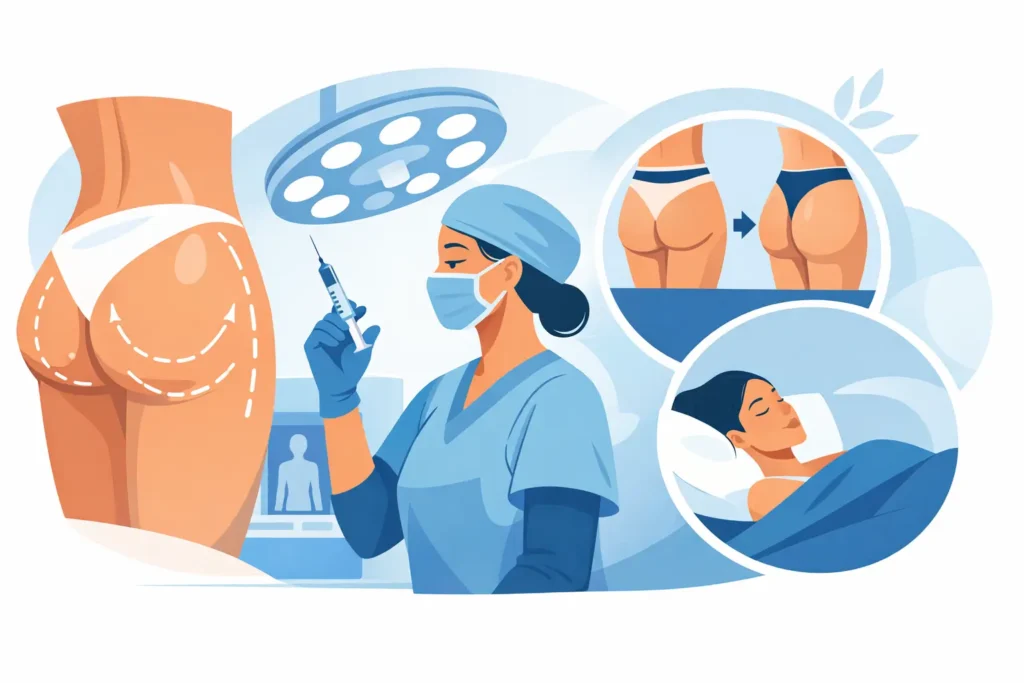
A Brazilian butt lift, commonly called a BBL, uses your own fat to enhance the buttocks. Fat is carefully removed from areas such as the abdomen, flanks, back, waist, or thighs through liposuction. After purification, selected fat cells are strategically placed beneath the skin of the buttocks to improve volume, projection, and contour.
The procedure has a dual aesthetic advantage. It can create more definition through the midsection while adding softness and shape to the buttocks. For many patients, this balance is more appealing than a dramatic increase in size alone. A well-planned BBL should complement the shoulders, waist, hips, thighs, and overall frame.
Because the procedure uses your own tissue, the result can feel and look natural. However, not all transferred fat survives. A portion is naturally reabsorbed during healing, which is why surgical planning accounts for long-term volume rather than the appearance immediately after surgery.
Who Is a Good Candidate for BBL Surgery?
The right candidate is in generally good health, has sufficient donor fat for transfer, and is close to a stable weight. Patients should have realistic expectations and understand that a BBL is a contouring procedure, not a substitute for weight loss or a way to achieve another person’s body shape.
Your existing anatomy matters. A petite patient with limited donor fat may benefit from a subtle enhancement rather than a high-volume result. A patient with more available fat may have greater flexibility in sculpting the waist and lower back, but more fat does not automatically mean a better outcome. Precision, tissue quality, and harmonious proportions remain the priority.
Patients should be prepared to stop smoking and nicotine use well before surgery, as directed by their surgeon. Nicotine can compromise circulation and healing. Medical history, current medications, previous surgeries, anemia risk, and plans for future weight changes should all be reviewed during consultation.
When another approach may be more appropriate
A BBL may not be the best choice for every body. Patients with very limited fat reserves may not be candidates for a meaningful fat transfer. Those planning significant weight loss may be advised to reach a stable weight first, since substantial changes can alter the result.
Skin laxity also deserves careful attention. If loose skin is the primary concern after pregnancy or major weight loss, a tummy tuck, body lift, or another contouring procedure may offer a more appropriate foundation. In some cases, combining procedures is possible, but safety, recovery demands, and operative time must be considered individually.
Safety Is the Foundation of Every BBL Surgery Guide
A BBL requires exceptional surgical judgment. Although it is frequently discussed as a beauty procedure, it remains a significant operation with real risks. The most serious BBL-specific concern is fat embolism, which can occur if fat enters large blood vessels. This is why technique, anatomical knowledge, and a safety-first surgical environment are not optional details.
Current safety-focused practice centers on placing fat only in the subcutaneous layer, above the muscle, rather than injecting into or beneath the gluteal muscle. Many surgeons also use real-time ultrasound guidance to visualize the cannula and confirm the appropriate plane during fat transfer. Ask directly how your surgeon approaches fat placement, what safety protocols the facility follows, and who will be present throughout your procedure.
Other potential risks include bleeding, infection, fluid accumulation, contour irregularities, asymmetry, delayed healing, changes in sensation, anesthesia complications, and the possibility that a revision may be needed. Even with meticulous technique, healing is individual. A trustworthy consultation addresses these realities with clarity rather than promises of perfection.
Choosing a surgeon and surgical setting
Credentials matter, but so does specialization. Look for a plastic surgeon with formal training, a demonstrated understanding of body contouring, and a portfolio that reflects refined, proportional results across different body types. Before-and-after photographs should be evaluated for consistency, scar placement, waist definition, and how naturally the enhanced buttocks fit the patient’s frame.
The facility should be properly equipped, staffed, and prepared for patient safety before, during, and after surgery. For international patients, communication is equally meaningful. You should know who will answer questions before travel, how follow-up will be arranged, and what support is available if concerns arise during recovery.
Preparing for a More Comfortable Recovery
Recovery begins before surgery. Patients are commonly asked to complete preoperative testing, adjust medications when medically appropriate, prepare loose clothing, arrange transportation, and set up a calm place to heal. If you are traveling, allow enough time in the area for in-person postoperative assessments before flying home.
The first several days usually involve swelling, soreness, bruising, and limited mobility. Liposuction areas may feel tight or tender, while the buttocks may appear fuller than the eventual result. Compression garments are often used to support the treated areas, though your surgical team will provide instructions tailored to your procedure.
Protecting the transferred fat is an important part of healing. Patients are generally instructed to avoid direct pressure on the buttocks for a period determined by their surgeon. This can mean sleeping on the stomach or side and using a specialized cushion when sitting is necessary. Short, gentle walks are encouraged early to support circulation, but strenuous exercise and heavy lifting must wait until you are cleared.
Most patients need dedicated time away from work and social commitments. The exact timeline depends on the extent of liposuction, the volume transferred, the nature of your work, and how your body heals. Swelling improves gradually, and the contour continues to settle over several months. Patience is part of the process.
Maintaining Your BBL Result
Once the surviving fat cells establish their blood supply, they behave like fat elsewhere in the body. A stable lifestyle is therefore the most reliable way to preserve your result. Significant weight gain can increase the size of fat cells, while significant weight loss can reduce volume in both the buttocks and donor areas.
Balanced nutrition, hydration, gradual return to exercise, and consistent weight management support the longevity of your contour. A BBL does not require an extreme routine. It rewards sustainable habits that protect both your investment and your overall well-being.
Planning BBL Surgery in Brazil
For patients traveling from the United States or Europe, the experience should feel organized well before departure. Initial planning often begins with a detailed virtual assessment, medical history review, and discussion of your aesthetic goals. Clear photographs may be requested so the surgeon can assess donor areas, skin quality, and proportion.
Travel planning should include adequate recovery time, accommodation that supports rest, a trusted companion when recommended, and a plan for postoperative visits. Do not schedule sightseeing, long drives, or demanding social obligations during the early phase of recovery. Your body needs rest, hydration, nourishing meals, and close adherence to instructions.
At Dr. Hebert Lamblet Plastic Surgery, international care is approached with the same attention given to surgical design: thoughtfully, personally, and with respect for every detail of the patient journey. The goal is not to make travel feel incidental, but to ensure you feel supported from your first consultation through your return home.
Questions Worth Asking at Your Consultation
A meaningful consultation should leave you informed, not rushed. Ask what result is realistic for your anatomy, where fat will be harvested, how the surgeon approaches safe fat placement, and what recovery will require in practical terms. Discuss the possibility of asymmetry, fat reabsorption, and whether your desired volume is safely achievable in one procedure.
You should also ask about the full recovery plan, including compression garments, sitting restrictions, follow-up appointments, travel clearance, and who to contact after hours. The quality of the answers often reveals as much as the answers themselves. You deserve direct medical guidance, careful listening, and a plan that reflects your individual needs.
The most beautiful BBL results are never rushed or copied. They are designed with restraint, performed with precision, and given the time to heal into a shape that feels confident, balanced, and entirely your own.
