
 Português
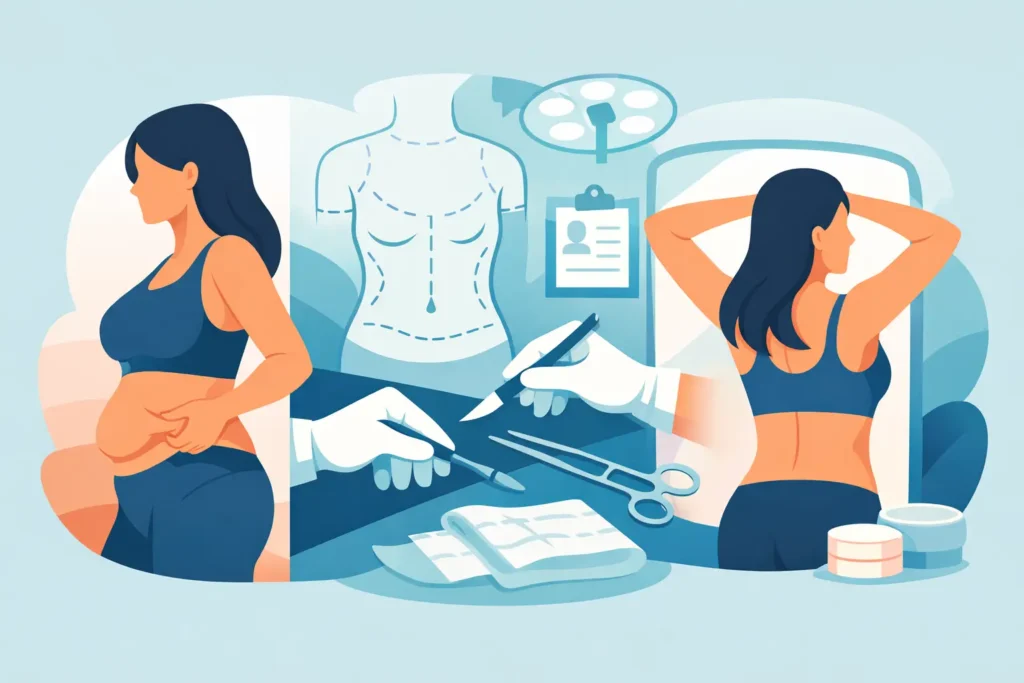
A significant weight-loss achievement can change far more than a number on the scale. Yet for many patients, loose skin may obscure the strong, healthy silhouette they have worked hard to create. Loose skin surgeries are designed to address this concern by removing excess skin and refining body contours with a result that looks proportionate, elegant, and true to the individual.
These procedures are not a reward for weight loss, nor are they a substitute for it. They are carefully planned operations for patients whose skin, tissue quality, and overall health make surgery appropriate. The right plan considers where laxity appears, how much skin needs to be removed, whether volume has been lost, and what level of scarring a patient is prepared to accept for a more refined contour.
Why Loose Skin Develops After Weight Loss
Skin has remarkable elasticity, but it does not always retract fully after the body changes. The degree of laxity can depend on the amount and speed of weight loss, age, genetics, sun exposure, pregnancy history, smoking, and the length of time the skin was stretched.
After substantial weight loss, excess skin often develops around the abdomen, breasts or chest, upper arms, thighs, buttocks, back, and face. Some patients experience physical discomfort, recurrent irritation in skin folds, or difficulty finding clothing that fits comfortably. Others are primarily concerned with the appearance of deflated or hanging tissue.
Exercise can strengthen the muscles beneath the skin and support a healthy body composition, but it cannot remove a true excess of stretched skin. When laxity is significant, surgical excision is typically the only method that can create a meaningful improvement.
The Main Types of Loose Skin Surgeries
Body contouring after weight loss is rarely a one-procedure decision. A thoughtful surgical plan may focus on a single area or coordinate several procedures in stages, depending on safety, recovery needs, and the patient’s priorities.
Tummy Tuck and Body Lift
A tummy tuck, or abdominoplasty, removes loose abdominal skin and can repair separated abdominal muscles when indicated. It is often appropriate for patients with laxity concentrated in the lower abdomen after pregnancy or weight loss. Liposuction may be incorporated when localized fat remains, but it does not replace skin removal.
For patients with circumferential laxity, a lower body lift may be considered. This more extensive operation addresses the abdomen, outer thighs, lower back, and buttocks through an incision placed around the lower torso. The trade-off is a longer scar, but for the right candidate, a body lift can create a more balanced transformation than an abdominal procedure alone.
Breast Lift or Chest Contouring
Weight loss can reduce breast volume and leave the skin envelope stretched. A breast lift reshapes and elevates the breast tissue while removing excess skin. Some patients choose implants or fat grafting to restore upper-pole fullness, while others prefer a smaller, lighter breast with a lifted shape. The ideal choice depends on existing tissue, desired size, and the quality of the skin.
Men may experience loose chest skin after major weight loss, sometimes along with enlarged breast tissue. Male chest contouring can remove excess skin and address the underlying tissue to create a flatter, more defined chest.
Arm Lift and Thigh Lift
An arm lift, or brachioplasty, improves loose skin along the upper arms. The incision is often placed on the inner or back portion of the arm, where it can be less visible in a relaxed position. In more limited cases, a smaller incision near the underarm may be possible, though it cannot correct extensive laxity.
A thigh lift can improve hanging or crepey skin on the inner thighs, outer thighs, or both. Because the thigh area is subject to movement and friction, recovery planning is especially important. Compression garments, activity restrictions, and close follow-up all help support healing.
Back Lift and Buttock Reshaping
Bra-line rolls, loose upper-back skin, and flattened buttocks are common concerns after weight loss. A back lift can remove redundant skin and improve the transition from the back to the waist. Buttock reshaping may combine lifting techniques with carefully selected volume restoration, including autologous fat grafting when there is enough donor fat and it is medically appropriate.
The most refined result is not necessarily the most dramatic one. It is a contour that creates harmony between the waist, hips, thighs, and buttocks while respecting the patient’s anatomy.
Are You a Candidate for Surgery?
The best candidates have reached a stable weight, ideally maintaining it for several months before surgery. This helps the surgeon plan accurately and reduces the chance that continued weight change will compromise the result. Patients should also be in good general health, have realistic expectations, and be prepared to follow recovery instructions carefully.
Nutritional status matters greatly after bariatric surgery or major weight loss. Adequate protein, iron, vitamins, and other nutrients support wound healing. A surgeon may request medical clearance and laboratory testing, particularly when there is a history of diabetes, anemia, blood-clotting concerns, or previous bariatric procedures.
Smoking and nicotine products can significantly impair blood supply to healing skin. Patients are generally asked to stop nicotine well before and after surgery. This is not a minor detail: poor wound healing and skin loss are among the risks that careful preparation aims to reduce.
Scars, Results, and the Decisions That Matter Most
Every procedure that removes skin creates a scar. The essential question is not whether scars exist, but whether their placement and expected appearance are an acceptable trade for the improved contour. An experienced plastic surgeon places incisions as discreetly as anatomy allows, often within underwear, bra, or swimsuit lines. Still, scars need time. They commonly remain pink or firm early in healing and may continue maturing for a year or longer.
Results also depend on skin quality. Surgery can remove excess tissue and reshape the body, but it cannot create the elasticity of much younger skin. Patients with thinner or sun-damaged skin may have residual looseness, even after a well-executed operation. This is where careful consultation matters: honest surgical planning protects patients from pursuing an unrealistic ideal.
It may also be safer to divide treatment into stages rather than combine every desired procedure at once. Combining operations can reduce the number of recovery periods, but it may increase operative time, healing demands, and risk. The appropriate approach depends on the extent of surgery, medical history, support at home, and the surgeon’s judgment.
What Recovery Really Requires
Recovery after loose skin surgery is an active process. Most patients need help at home during the first days, especially after abdominal or lower-body procedures. Early walking is encouraged to support circulation, while lifting, strenuous exercise, and certain movements must be restricted for a period determined by the procedure.
Swelling, tightness, bruising, and temporary changes in sensation are common. Surgical drains may be used in some cases, and compression garments can help manage swelling and support the new contours. Follow-up appointments are essential for monitoring incision healing and guiding a safe return to daily life.
For international patients, recovery planning should begin before travel. This includes arranging accommodations suitable for rest, allowing enough time in Brazil for in-person postoperative care, and organizing support during the early healing period. At Dr. Hebert Lamblet Plastic Surgery, this level of planning is part of creating a more secure and reassuring experience for patients traveling for treatment.
Choosing a Surgical Plan That Feels Like You
A successful body-contouring journey begins with priorities, not a procedure list. Some patients want to feel comfortable in fitted clothing again. Others want relief from skin-fold irritation or a breast and abdominal contour that better reflects their new lifestyle. These goals are personal, and the surgical plan should be equally personal.
Bring clear questions to your consultation: Which areas will make the greatest difference? What scar pattern is required? Should procedures be staged? How long should you remain near your surgical team? A precise, compassionate consultation replaces uncertainty with a plan built around your safety, anatomy, and vision.
The most satisfying results tend to come from patience as much as technique. Give your body the time, care, and expert attention it deserves, and let the final contour emerge gradually as healing progresses.
