
 Português
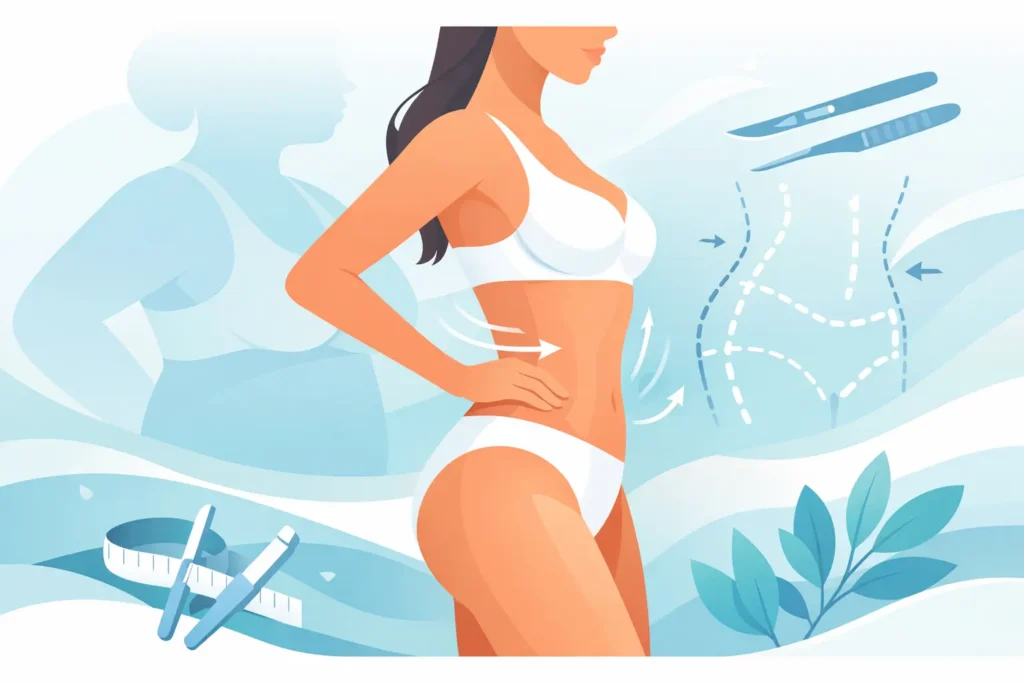
The scale may finally reflect your hard work, but many patients are surprised by what comes next. After major weight loss, the body often carries the visible imprint of that journey in the form of loose skin, stretched tissue, and contours that do not match how strong or healthy you feel. That is why body contouring after weight loss surgery is often considered the final stage of transformation, not a cosmetic afterthought.
For many men and women, this phase is deeply personal. Clothing may still fit poorly. Exercise can improve strength, but it cannot tighten skin that has lost elasticity. Rashes, irritation, and discomfort can affect daily life, especially around the abdomen, arms, thighs, and breasts. Thoughtful surgical contouring can address these concerns while restoring proportion, comfort, and confidence in a way that looks refined rather than overdone.
What body contouring after weight loss surgery actually addresses
Massive weight loss changes much more than body size. Skin, fat distribution, and connective tissue all respond differently depending on age, genetics, the amount of weight lost, and how long the skin was stretched. Some patients have significant abdominal overhang. Others are most bothered by deflated breasts, sagging upper arms, flattened buttocks, or laxity along the inner thighs.
Body contouring is not one single operation. It is a tailored plan designed to remove excess skin, improve body shape, and restore smoother transitions between areas. The goal is not perfection. The goal is harmony – a result that feels natural on your frame and supports the life you worked hard to build.
This usually means looking at the body as a whole rather than chasing one isolated concern. A lower body lift may reshape the abdomen, outer thighs, hips, and buttocks in one operation. A tummy tuck may be the right answer for someone whose main issue is the midsection. For others, an arm lift, thigh lift, breast lift, breast augmentation, or fat grafting may play an important role in the final outcome.
When is the right time for body contouring after weight loss surgery?
Timing matters more than many patients realize. Surgery is typically best considered once your weight has stabilized for several months and your nutritional health is well managed. If the body is still changing rapidly, the result can change with it.
This is especially relevant after bariatric procedures, when weight loss may continue for 12 to 18 months or longer. Operating too early can compromise planning and healing. Operating too late is not necessarily a problem, but waiting until your body is medically stable gives your surgeon a much clearer view of what tissue needs to be removed and how to create lasting contour.
Your readiness is not only about the scale. Protein intake, vitamin levels, anemia risk, skin quality, and overall health all influence recovery. Patients who have lost a significant amount of weight sometimes need a more detailed preoperative evaluation because the body can look ready before it is truly optimized for surgery.
Which procedures are most common?
The answer depends on where laxity is most pronounced and how much correction is needed. The abdomen is usually the first area patients ask about, and for good reason. Skin laxity around the stomach can be extensive after major weight loss, often affecting the waistline, mons area, and lower back as well.
A tummy tuck can flatten and tighten the abdomen, and in many cases it also repairs separated abdominal muscles. When laxity extends around the torso, a circumferential body lift may be more appropriate because it addresses the front and back together for a more balanced silhouette.
The breasts are another common concern. After weight loss, breast volume often decreases while the skin envelope remains stretched. Some patients want a lift alone. Others prefer a lift with implants or a lift with fat transfer to restore upper fullness while maintaining a natural look.
The upper arms and thighs can also be difficult to improve without surgery. An arm lift removes hanging skin that may make fitted clothing uncomfortable or unflattering. A thigh lift can improve contour and reduce friction, although it requires careful planning because these areas are prone to tension and swelling during recovery.
Many post-weight-loss patients also benefit from liposuction as a finishing tool, not a substitute for skin removal. Liposuction can refine shape, but it cannot solve significant laxity on its own. In skilled hands, it can complement excisional surgery and improve definition without creating an overly operated appearance.
The trade-off patients should understand before surgery
The central trade-off in post-weight-loss contouring is simple but important: excess skin can be removed, but this requires scars. For most patients, the question is not whether scars exist. It is whether the improvement in shape, comfort, and mobility is worth them.
A well-planned contouring procedure places scars strategically and closes tissue with precision, but these operations are still extensive by nature. Patients who expect dramatic skin removal without visible scar lines are setting themselves up for disappointment. The more realistic and more useful perspective is that scars are part of the reconstruction of your shape.
This is where surgical judgment matters. An elegant result depends on more than removing skin aggressively. Too much tension can distort anatomy and widen scars. Too little correction can leave residual laxity. The best outcome sits in that narrow space between refinement and restraint.
Why surgical planning matters so much
Post-weight-loss surgery is not standard cosmetic surgery with a larger skin excision. The tissue quality is different. The anatomy is different. The emotional expectations are different too.
Patients often arrive after a long and demanding journey, and they want their final result to feel complete. That is understandable, but it can lead to the temptation to treat everything at once. In some cases, combining procedures is safe and efficient. In others, staging surgery is the more sophisticated choice because it lowers operative risk, supports healing, and allows each area to be addressed with greater precision.
A meticulous surgeon will evaluate skin redundancy, scar placement, body proportions, circulation, nutritional status, and how each procedure affects the next. This is especially important for international patients, who also need a recovery timeline that aligns with travel planning and postoperative support. At Dr. Hebert Lamblet Plastic Surgery, that level of structure is part of what helps patients feel calm and well cared for throughout the process.
Recovery is real, and it deserves respect
Recovery after body contouring is manageable, but it is not minor. The first days usually involve swelling, soreness, limited mobility, and compression garments. Drains may be used in some procedures. Most patients need help at home initially, especially after abdominal or circumferential surgery.
The emotional side of recovery also deserves honesty. You may not look immediately better in the first week. Swelling, bruising, tightness, and fatigue can temporarily obscure the result. That does not mean something is wrong. It means healing is underway.
Most patients begin to appreciate a clearer shape over the following weeks, with continued refinement over several months. Scar maturation takes longer. Results improve with time, consistency, and patience.
How to know if you are a good candidate
A good candidate is usually near a sustainable goal weight, medically stable, and prepared for both surgery and scar care. Non-smokers generally heal better. Patients with realistic expectations also tend to be happiest because they understand that contouring improves the body significantly, but it does not erase every sign of prior weight fluctuation.
Motivation matters too. The strongest candidates are not chasing a trend or someone else’s ideal body. They want their outer appearance to reflect the effort, discipline, and health changes they have already achieved.
If that is where you are, consultation should feel less like a sales conversation and more like a strategic discussion. Which areas bother you most? Which procedures can be combined safely? What result fits your anatomy rather than a generic template? Those questions lead to better decisions than focusing only on price or speed.
The final stage of weight loss is often not about becoming someone new. It is about allowing your body to look more aligned with the life you have already reclaimed, with results that feel balanced, elegant, and truly your own.
