
 Português

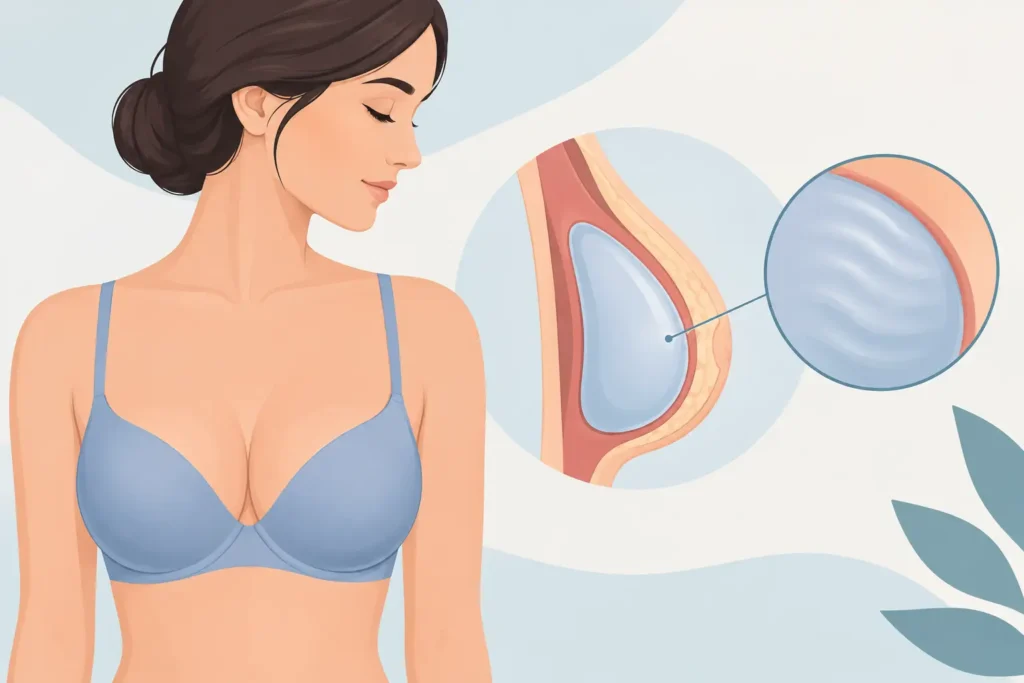
Breast implant rippling is a concern many patients raise after augmentation, particularly when they notice subtle folds, waves, or wrinkles along the side or lower portion of the breast. It may be visible only in certain lighting or positions, or it may be felt without being seen. While rippling is not always harmful, it can affect the smooth, refined appearance patients expect from breast enhancement and deserves a thoughtful, individualized evaluation.
A beautiful breast augmentation is not defined simply by implant size. It depends on the relationship between the implant, the chest wall, the breast tissue, the skin envelope, and the patient’s desired silhouette. Understanding why rippling occurs can help patients make more confident decisions before surgery and pursue the right solution if it develops afterward.
What Is Breast Implant Rippling?
Rippling describes folds in the outer shell of a breast implant that can be felt through the breast tissue or become visible on the skin surface. The appearance can resemble faint vertical or horizontal lines, most often at the outer breast, along the cleavage area, or beneath the breast.
Some degree of implant folding can occur naturally with movement. The concern arises when there is not enough soft-tissue coverage to conceal those folds, or when changes in the implant pocket allow the implant edge or shell to become more apparent. In many cases, rippling is mild and noticeable only to the patient. In others, it can be visible in fitted clothing, swimwear, or when leaning forward.
Rippling should not be confused with capsular contracture, which occurs when scar tissue around an implant tightens and may cause firmness, distortion, or discomfort. The two conditions can occasionally coexist, but they require different assessment and treatment strategies.
Why Breast Implant Rippling Happens
The most common reason for rippling is limited tissue coverage over the implant. Patients with naturally thin breast tissue, a low body-fat percentage, or delicate skin may have less padding to conceal the implant shell. This is especially relevant in the upper and outer breast, where natural tissue coverage can be lighter.
Implant type also matters. Saline implants have historically been more likely to produce visible or palpable rippling than silicone gel implants because their fluid-filled structure can create more noticeable folds. Modern cohesive silicone gel implants often provide a smoother feel and may reduce the likelihood of rippling, but no implant can eliminate the possibility entirely.
Implant placement plays an equally important role. When an implant is placed above the chest muscle, there may be less coverage in patients with very thin tissue. Placement beneath the muscle can provide additional upper-pole coverage for selected patients, although it may not be the ideal approach for every anatomy, lifestyle, or aesthetic goal.
Other contributing factors may include an implant that is too large for the available tissue envelope, changes in body weight, pregnancy, breastfeeding, aging skin, implant underfilling in saline augmentation, or changes to the implant pocket over time. A pocket that has stretched or shifted can alter the way an implant settles, making edges and folds more noticeable.
Who May Be More Prone to Rippling?
Rippling is more likely in patients with lean frames and minimal natural breast volume, but body type alone does not determine the outcome. A meticulous preoperative assessment considers tissue thickness, skin quality, chest width, breast asymmetry, and the degree of upper-pole fullness a patient wants.
Patients undergoing revision breast surgery may also face a higher risk. Previous implants, scar tissue, thinning of the breast envelope, and pocket changes can make revision planning more complex. This does not mean a smooth, natural-looking result is out of reach. It means the surgical plan should be especially precise and may require a combination of techniques rather than a simple implant exchange.
A patient seeking a very full, high-profile look with limited tissue coverage may need to weigh aesthetic preferences against the increased possibility of visible implant characteristics. An experienced plastic surgeon should discuss that trade-off openly. The most elegant result is one that respects the patient’s anatomy rather than forcing it to accommodate an unsuitable implant choice.
Can Rippling Be Prevented?
No surgeon can promise that rippling will never occur, but careful planning can reduce the likelihood. Prevention begins with choosing an implant that suits the patient’s tissue quality and proportions, not simply a desired cup size. Implant width, projection, gel cohesiveness, and placement should all be selected with the individual breast in mind.
For patients with limited soft-tissue coverage, a more cohesive silicone gel implant may be considered. Depending on the anatomy, submuscular or dual-plane placement may offer improved coverage in the upper breast. In some cases, modest implant sizing creates a more natural transition and reduces strain on the tissues over time.
Autologous fat grafting can also be valuable for selected patients. This technique uses the patient’s own purified fat to add a soft layer over areas where an implant edge or ripple may otherwise be visible. It can enhance contour while preserving a natural feel, though fat grafting has its own considerations, including variable fat survival and the possibility that more than one session may be needed.
The best prevention is not a single technique. It is a surgical plan built around proportion, tissue support, and long-term harmony.
Treatment Options for Visible or Bothersome Rippling
The right treatment depends on why the rippling developed, how visible it is, and whether there are associated concerns such as implant malposition, asymmetry, or capsular changes. A careful examination is essential before considering revision surgery.
For mild rippling that is only felt and not seen, observation may be appropriate. If the breasts are otherwise soft, well-positioned, and aesthetically pleasing, surgery may not be necessary. Patients should never feel pressured into revision solely because they can detect a subtle implant fold.
When rippling is visible or affects confidence, treatment may involve changing to a more cohesive silicone implant, adjusting implant size, revising the pocket, or changing the plane of implant placement. Fat grafting may be used to improve coverage over the implant, particularly in the upper chest or cleavage area. In more complex revision cases, supportive materials may be considered to reinforce the pocket and provide additional control over implant position.
These options are not interchangeable. An implant exchange alone may not correct rippling caused by thin tissue, just as fat grafting alone may not resolve a poorly positioned implant. The most successful revision approach addresses the underlying reason for the concern rather than treating only what is visible on the surface.
When to Contact Your Plastic Surgeon
Rippling that has been present from the early healing period may become less noticeable as swelling resolves and tissues settle. However, a new or rapidly worsening change should be assessed. Contact your plastic surgeon if you notice sudden asymmetry, significant firmness, persistent pain, swelling, redness, changes in breast shape, or a visible change in implant position.
For patients traveling for surgery, follow-up planning is particularly important. Recovery should allow adequate time near the surgical team before long-distance travel, and patients should understand how postoperative questions will be handled once they return home. Clear communication, photographs when appropriate, and scheduled follow-up help protect both comfort and peace of mind.
At Dr. Hebert Lamblet Plastic Surgery, breast surgery planning is guided by refined aesthetics, meticulous technique, and respect for the individual anatomy. Whether a patient is considering a first augmentation or seeking revision after a previous procedure, the goal is never a generic result. It is a balanced, graceful outcome that feels as natural as it looks.
If rippling is affecting how you feel about your augmentation, a focused consultation can provide clarity. The most reassuring next step is an honest assessment of your tissue, implant position, and aesthetic goals, followed by a plan designed for your body and your long-term confidence.
