
 Português
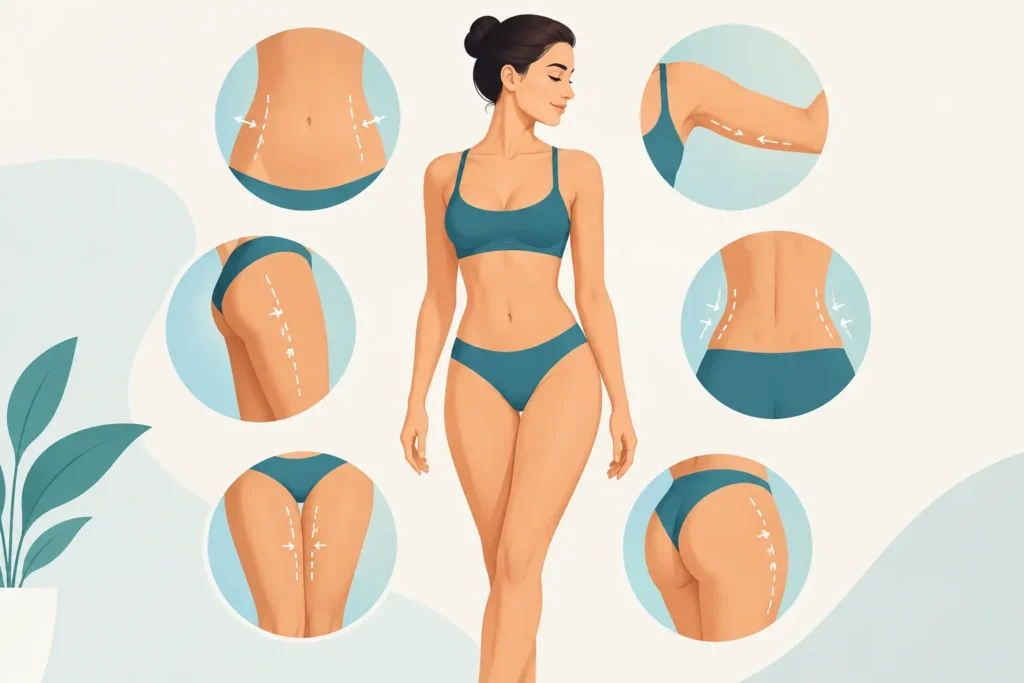
A well-contoured silhouette is rarely about changing everything. It is often about refining the small areas that resist diet, exercise, and an otherwise healthy routine. Liposuction areas for body sculpting are selected with care, not simply to remove fat, but to bring proportion, definition, and balance to the body as a whole.
For the right patient, liposuction can refine contours that feel out of alignment with their natural frame. The most elegant results come from thoughtful planning, meticulous technique, and a clear understanding that every body has its own anatomy, skin quality, and aesthetic potential.
How Liposuction Supports Body Sculpting
Liposuction is a surgical contouring procedure designed to remove localized fat deposits through small, carefully placed incisions. It is not a substitute for weight loss, nor is it intended to create an entirely different body. Instead, it can improve transitions between areas of the body, reveal existing shape, and address fullness that has remained despite stable weight.
Body sculpting begins with proportion. A surgeon considers the waist in relation to the hips, the abdomen in relation to the back, and the arms or thighs in relation to the torso. Treating a single area may be appropriate for some patients, while others benefit from a more comprehensive plan that creates harmony across adjacent regions.
Skin elasticity matters as much as the amount of fat present. When skin has good recoil, it may redrape smoothly after fat removal. When there is significant laxity, particularly after pregnancy, substantial weight loss, or aging, another procedure such as a tummy tuck, body lift, or arm lift may provide a more refined result than liposuction alone.
Common Liposuction Areas for Body Sculpting
Abdomen and Waist
The abdomen is one of the most requested treatment areas because even modest fullness can soften the waistline and change how clothing fits. Liposuction may address the upper abdomen, lower abdomen, and flanks, often called love handles, to create a smoother, more defined midsection.
For men, abdominal contouring may focus on a leaner, more athletic outline. For women, the goal may be a softer but more sculpted waist that complements the natural curves of the hips. The best approach depends on the patient’s anatomy and desired aesthetic, rather than a single ideal shape.
Patients with loose abdominal skin or separated abdominal muscles may need more than fat removal. In these cases, a tummy tuck can address excess skin and restore muscular support, while liposuction can refine the surrounding contours.
Back and Bra Line
Fullness along the upper or lower back can be difficult to improve through exercise alone. Liposuction in this region can smooth the bra line, refine the waist from the side and back, and create a cleaner transition into the hips.
This area is frequently treated alongside the abdomen and flanks because these regions are visually connected. Addressing them together can create a more cohesive result than focusing only on the front of the body. Incision placement and careful fat removal are especially important here to preserve a natural contour and avoid an overtreated appearance.
Hips, Flanks, and Lower Back
The hips and lower back help define the body’s overall silhouette. Some patients feel their waist disappears into their hips, while others are concerned by fullness above the buttocks or at the outer flanks. Selective liposuction can enhance waist definition and improve the proportion between the torso and lower body.
This treatment may also be part of a Brazilian butt lift plan when a patient desires both refined donor areas and enhanced gluteal volume through their own purified fat. Not every patient seeking liposuction needs or wants fat transfer. A detailed consultation determines whether contouring alone or a combined procedure better serves the desired outcome.
Thighs and Knees
The inner thighs, outer thighs, and knees can hold localized fat that makes the legs appear heavier or less defined. Liposuction can improve the contour of these areas, but thigh treatment requires a conservative, precise approach. The skin is thinner in certain regions, and excessive removal can produce irregularity or compromise smoothness.
Inner-thigh liposuction may reduce friction and improve comfort as well as appearance. Outer-thigh treatment can soften the transition from the hips to the legs. Around the knees, small-volume contouring may create a more elegant leg line for patients with good skin quality.
Arms and Underarms
Upper-arm fullness can be a source of self-consciousness in sleeveless clothing or photographs. Liposuction may reduce localized fat in the arms and around the underarm area, creating a lighter, more refined contour without changing the arm’s natural character.
The deciding factor is often skin elasticity. Patients with firmer skin may see excellent improvement with liposuction alone. If the skin is significantly loose, an arm lift may be the more appropriate solution, with or without limited liposuction for added refinement.
Chin, Jawline, and Neck
Facial and neck contouring require a different level of delicacy. Submental liposuction, which treats fullness beneath the chin, can sharpen the jawline and improve the definition between the chin and neck. For a patient with good skin elasticity, this procedure can create a remarkably refreshed profile with a relatively focused treatment area.
However, fullness beneath the chin is not always caused by excess fat alone. Skin laxity, a recessed chin, enlarged salivary glands, or underlying muscle anatomy may contribute. A consultation should identify the true source of concern before selecting treatment.
Male Chest and Other Targeted Areas
For men, liposuction can be effective for localized chest fullness when the concern is primarily fatty tissue. If glandular breast tissue is present, surgical excision may be necessary for a complete gynecomastia treatment plan. Men also commonly seek contouring of the abdomen, flanks, chest, and neck to create a more defined, balanced physique.
Smaller areas, including the upper pubic region, calves, or ankles, may be considered in carefully selected cases. These procedures are highly individualized. The goal is always to improve proportion, not to pursue a standardized body shape.
Choosing the Right Treatment Plan
The most successful liposuction plan begins with an honest conversation about goals, lifestyle, and recovery. During consultation, the surgeon evaluates fat distribution, skin tone, muscle structure, prior surgeries, and medical history. Photographs and physical examination help determine which areas can be treated safely and which combinations will look most natural.
A patient may request abdominal liposuction but discover that treating the flanks would produce a more balanced waist. Another may be considering thigh contouring but benefit more from a staged approach because of skin laxity. This level of planning protects both safety and aesthetic quality.
At Dr. Hebert Lamblet Plastic Surgery, body contouring is approached as surgical artistry guided by technical precision. The objective is not exaggerated transformation. It is a result that feels aligned with the patient’s frame, moves naturally, and remains elegant over time.
Recovery and Maintaining Your Contour
Recovery varies according to the number of areas treated and whether liposuction is combined with another procedure. Swelling, bruising, and temporary firmness are expected in the early weeks. A compression garment is usually recommended to support healing and help the tissues settle into their new contour.
Most patients can return to light daily activities within several days, although strenuous exercise and heavy lifting must wait until cleared by their surgeon. Early changes may be visible quickly, but the body needs time to resolve swelling. Final definition develops gradually over the following months.
Liposuction permanently removes fat cells from treated areas, yet remaining fat cells can still enlarge with weight fluctuation. Maintaining a stable weight, nourishing the body well, and following postoperative guidance help preserve the refinement achieved through surgery.
The right contouring plan should leave you looking like yourself, only more in balance with how you wish to feel in your body. A private consultation offers the clarity to move forward with a plan shaped around your anatomy, your lifestyle, and your vision for natural confidence.
